The Delicious Holly-Leafed Cherry

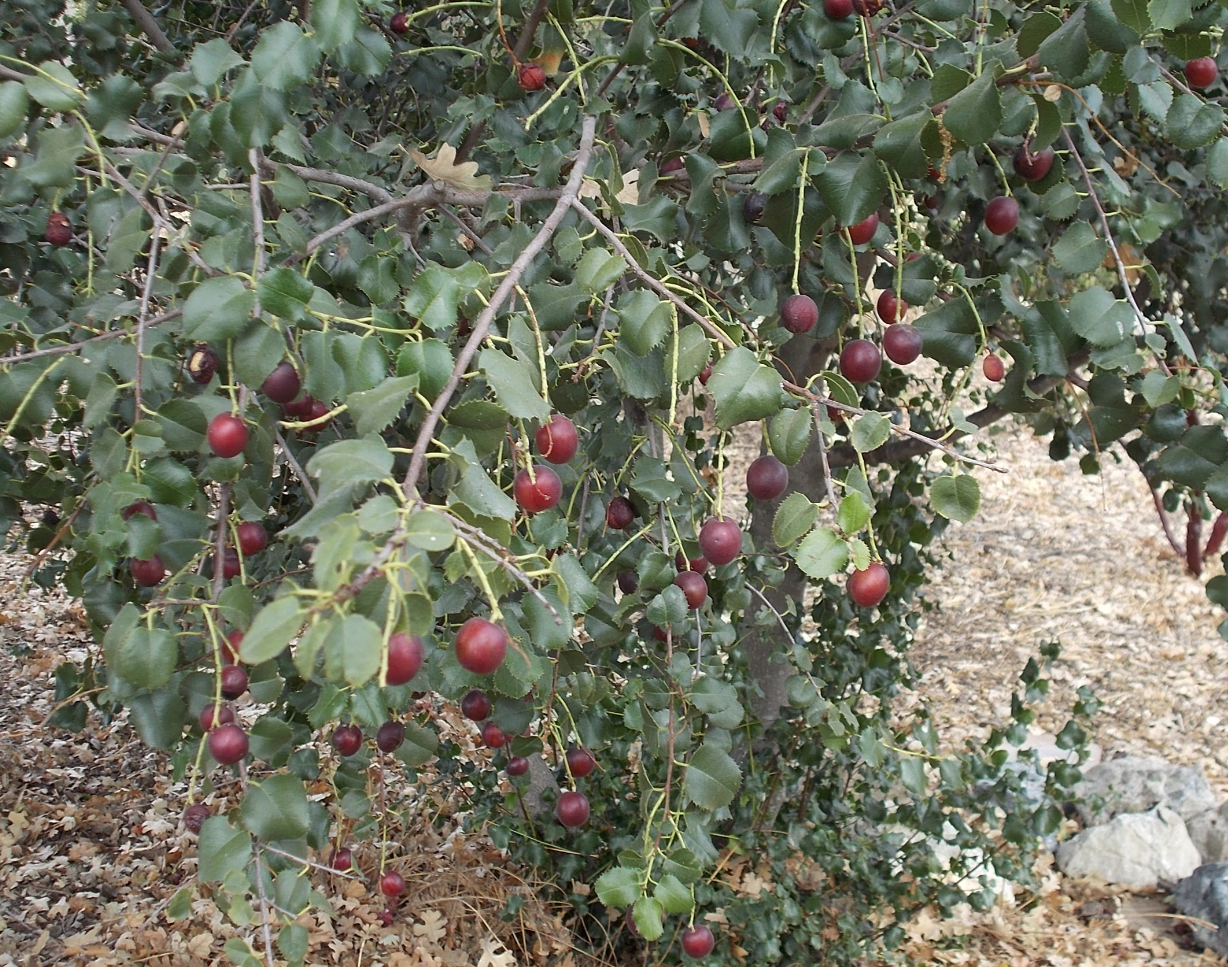
P. ilicifolia, ripe fruit           The holly-leafed cherry (Prunus ilicifolia) is an evergreen native that has leaves like holly, but really is a cherry (the cherries that we relish in pies, desserts and jams belong to the same genus, Prunus.  Sweet cherries are Prunus cerasus; sour cherries are Prunus avium.  And both of these are deciduous, not evergreen.)  But before you get too excited about making a pie out of these luscious-looking cherries, there are some things you should know about them.  (Remember – Most photos can be enlarged by clicking on them.)

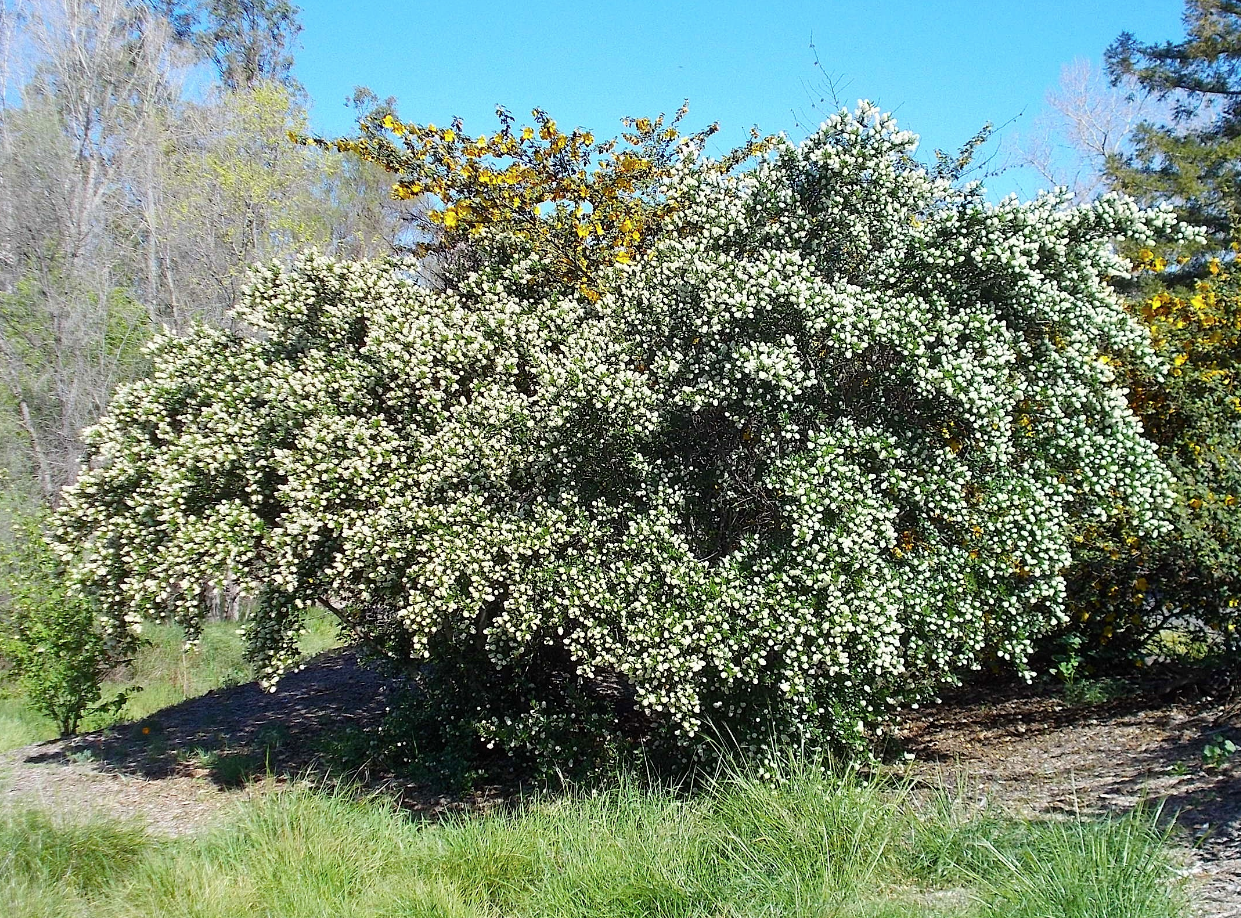
Holly-leafed cherry in bloom

Holly-leafed cherry in bloom

Young tree

A young holly-leafed cherry

The holly-leafed cherry can be grown as a tree that will be covered with clusters of white flowers in the Spring, or can be kept trimmed as a dense hedge.  By summer, the blossoms will have turned into round, marble-sized fruits that gradually blush red, then almost black when they are fully ripe.

Cherries almost ripe

Cherries almost ripe

Screen shot 2015-10-09 at 8.07.52 AM

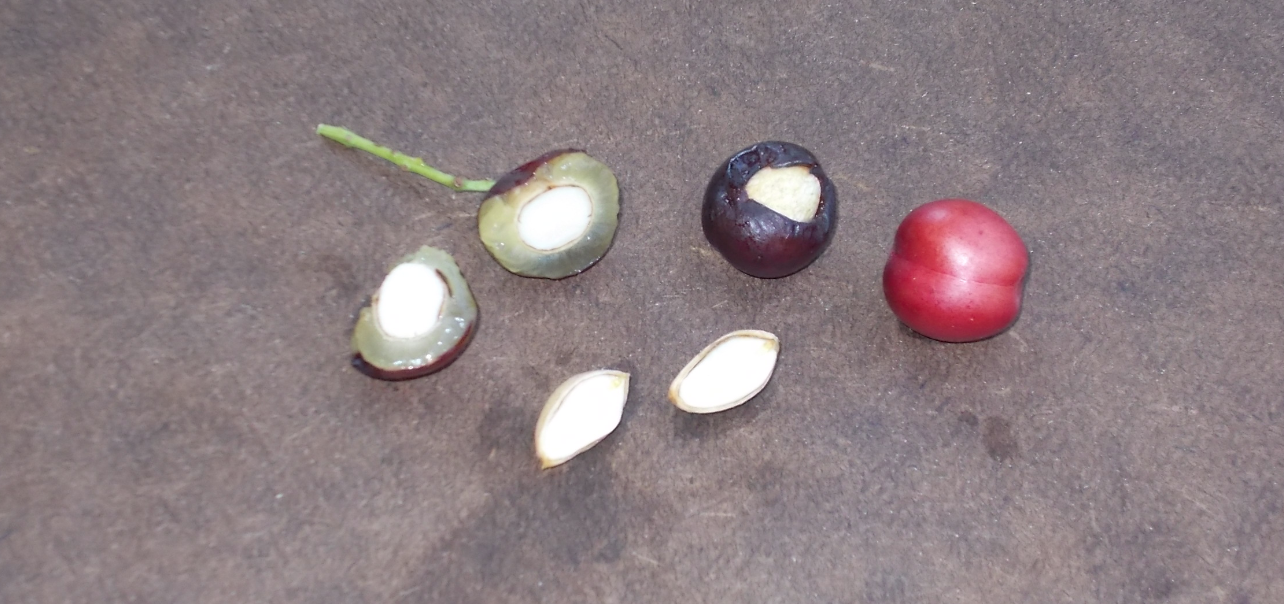
Anatomy of a holly-leafed cherry

Holly-Leafed Cherries as an Indigenous Food Source                                                             The comedian George Burns said that God’s only mistake was making the avocado pit too large.  But the avocado has nothing on the holly-leafed cherry.  Bite into one and you will find that the sweet-tasting pulp, unlike our commercial cherries, is little more than a thin coating around a large, hard pit.  Sweetness rapidly gives way to the bitterness of the pit, due to the presence of hydrocyanic acid in the pit.                                                                     Nonetheless, the Native Americans of California found a way to use Prunus ilicifolia, commonly called “slay” or “islay”, as a popular and versatile food.  They were more interested in the pit than in the pulp, and for some tribes the kernels inside the pits were second only to acorns in importance.  But first, the highly toxic hydrocyanic acid had to be removed from the pit.                                                                                                             To de-toxify the pits, they were first dried in the sun and cracked open to remove the kernels.  The dried kernels could be stored indefinitely, but before using them as food they were pounded and mashed and rinsed in water for several hours, until they were no longer bitter, in order to leach out the hydrocyanic acid.  The kernels could then be ground into a flour or porridge, or formed into cakes or balls and served with meat.  The flour made from it tasted like beans or chestnuts.  The ground meal was used as a base for soup, or made into tamale-like foods.  In fact, prepared islay was considered a delicacy that was used for ceremonial offerings, or offered as a welcoming gift for visitors.                            The Spanish missionaries recognized the importance of the holly-leafed cherry to the Native Americans.  Judith Larner relates that Indians living at the missions were given time off to allow for them to harvest this nourishing food.  The fruit was sufficiently abun- dant that enough could often be gathered to feed an entire village.  Captain Don Pedro Fages, who was in charge of the Presidio of Monterey in the 1770’s, wrote of the “good tamales made from islay by the Salinan people”.

The Rest of the Plant Wasn’t Wasted                                                                                         It might take a lot of cherries, but the thin pulp did not go to waste.  Consumed fresh, they were a welcome snack or a source of moisture for thirsty hunters.  They could be made into fruit leather, or soaked in water to make fruit juice.  They could even be fermented!                                                                                                                           Blossoms            The leaves have an almond scent when crushed.  The flowers are full of bees in the Spring.  A tea made from the bark or roots was used in treating coughs and colds.  The wood was used for making bows.                            The fruits were an ample food source for scrub jays, mockingbirds, robins and small mammals.  The leaves were an important browse species for bighorn sheep and mule deer, especially because they are still green during dry California summers when many other browse foods are gone.                              And in addition to being an attractive evergreen for any domestic landscape as well as being trimmable into an effective hedge, holly-leafed cherry is a good control for erosion on steep hillsides.

Mama tree and its baby!

Mama tree and its baby!

Quote du Jour                                                                                                                               “One person’s scruffy native, begging to be pruned, is another’s harbinger of our subtle seasonal changes and a desirable emblem of the naturalistic garden.”                             From California Native Plants for the Garden  (Bornstein, Fross, O’Brien), p. 35.

Guided Tours of the Granada Native Garden Are Available!                                                    Are you interested in seeing some of the plants that are described in this Newsletter or in past issues?  One or more staff of the GNG are routinely on duty at the Garden on Mondays and Thursdays, roughly between 10:00 AM and 12:00 noon.  But it isn’t very hard to arrange a guided visit at other times.  If you are interested in scheduling a visit, just email Jim at  JIMatGNG@gmail.com .  Or if you have any questions or inquiries, please email Jim at the same address!

ALN Credit

The Arroyo Mocho at the Granada Native Garden

Mountain origins mapIN THIS ISSUE . . .
•  The History of the Arroyo Mocho
•  How the Arroyo Mocho Got Its Name
•  Water in the Arroyo Mocho
•  Steelhead Trout in the Arroyo Mocho?
•  The Arroyo Mocho – A Riparian Community
•  Young Visitors from the Church of Jesus Christ of Latter-day Saints

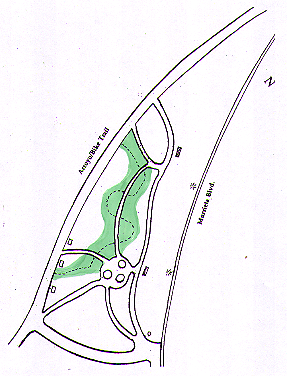
Livermore is enclosed by three arroyos, or creeks, passing around and thru the city.  All three arroyos originate in the hills in the northeastern part of Santa Clara County, or in other streams that feed into them, and flow westerly toward Pleasanton and Dublin.                       The Arroyo Las Positas, the shortest of the creeks and fed by the Arroyo Seco, runs north of Livermore along Highway 580.                                                                                    The Arroyo del Valle flows south of Livermore; it is dammed at Lake Del Valle and continues its flow thru Sycamore Grove Park toward Pleasanton.                                                    The Arroyo Mocho drains the hills the south of Livermore, and runs between Crane Ridge and Cedar Mountain, next to Mines Road, entering the City of Livermore just east of Robertson Park.  It flows thru the city northwesterly along the Arroyo Mocho hiking and biking trail, past the Granada Native Garden and the Oak Knoll Pioneer Memorial Park (the site of Livermore’s first public cemetery, now also known as “Daffodill Hill” and “Boot Hill”), and under Stanley Avenue.  From there, it turns west toward Isabel Ave. and joins the Jack London bike trail at El Charro Road.                                                                                  On the map below, the Granada Native Garden is the narrow green triangle at the bend in Murrieta Blvd, across the arroyo from Granada High School, and across the street from the Peppertree Plaza Shopping Center.

Map of current pathThe History of the Arroyo Mocho                                                                                                500 years ago, the northern part of the City of Pleasanton was a vast marsh, surrounded by a lagoon.  It was fed largely by Tassajara Creek, flowing from the north.  At its south end was Tulare Lake, fed from the southeast by the Arroyo del Valle, and from the east by the Arroyo Las Positas and the Arroyo Mocho, forming the lagoon encircling the marsh and lake.                                                                                                                    Tulare Lake           Originally, the Arroyo Mocho was an intermittent stream that may have flowed down several channels, carrying water, sand and gravel from the upper watershed, and depositing the sand and gravel over much of what is now the City of Livermore.  By 1875, as a result of the railroad, the layout of the city, and farmland, the Arroyo Mocho was confined to the present channel location, where it turned west of Murrieta Blvd. to flow parallel to the railroad.                                                                                                                       In the early 1990’s, with the construction of the Murrieta Meadows housing devel- opment south of Olivina Avenue and west of Hagemann Drive, Zone 7 created an innova- tive flood protection plan.  Two separate channels were created.
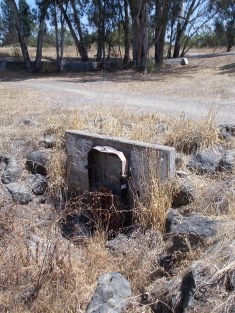
Water flows under the iron bridge and enters the original channel here.
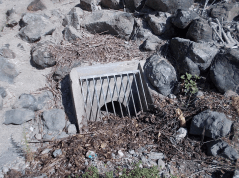
Water flows under the iron bridge and enters the original channel here.

Water from the Arroyo Mocho enters the original channel at this point under the iron bridge.

Water from the Arroyo Mocho enters the original channel at this point under the iron bridge.

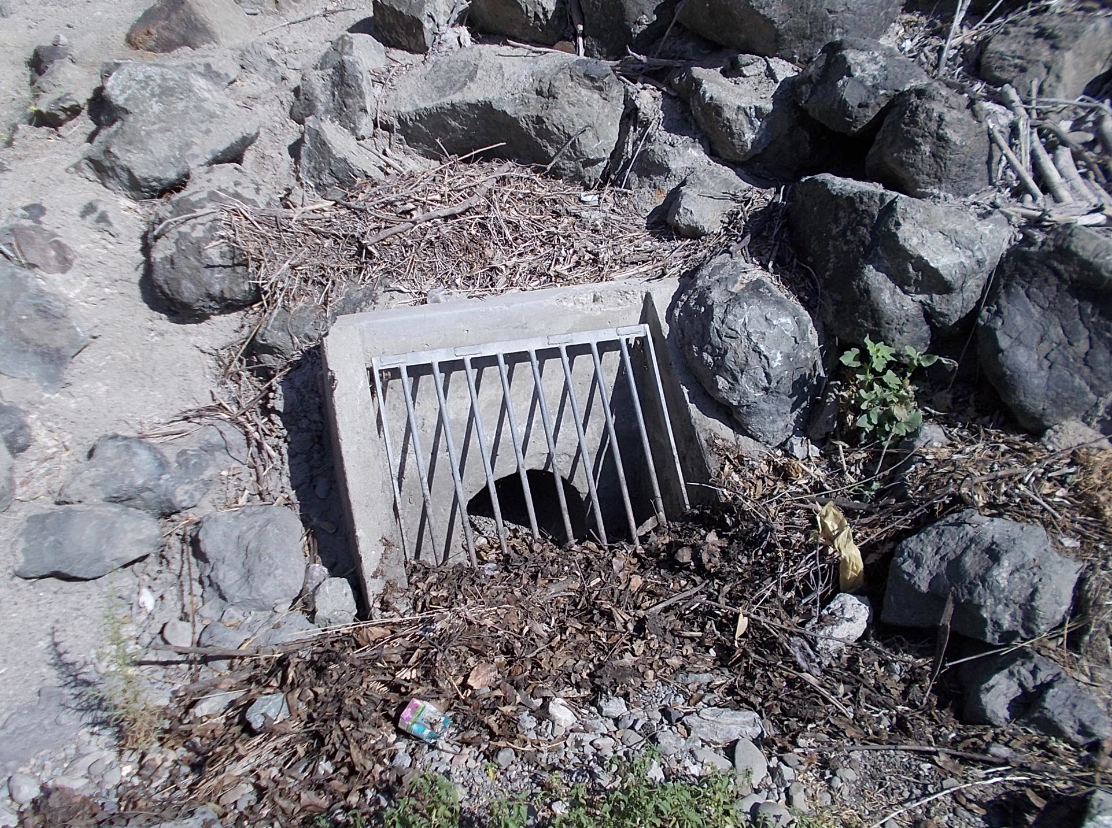
The first channel is the original, historical streambed of the arroyo.  The Arroyo Mocho Trail follows this comfortable, scenic path which runs alongside Daisyfield and Summertree Streets.  It is shaded with mature (but non-native) eucalyptus and native cottonwood and sycamore trees; subsequently it was planted with native toyon, coyote brush and Ceanothus.  When water is available in the Arroyo, the flow splits off from the Arroyo at a grate at the foot of the iron bridge near Murrieta Blvd. (see the photo above, left), flows underneath the bridge, and re-enters the historical channel a short distance on the other side of the bridge (see the photo above, right).  It parallels the Trail for about three-quarters of a mile to Rockrose St., near the intersection with Sparrow St., where it empties into the second channel (see the photo below, left).

Water from the original channel re-enters the Stanley Reach here at Rockrose St.

Water from the original channel re-enters the Stanley Reach here at Rockrose St.

The second channel, called the Stanley Reach Flood Bypass Channel, begins at the iron bridge near Murrieta Blvd.  It was constructed to accommodate higher flood flows during periods of heavy rainfall.  It runs westward parallel along the Arroyo Mocho Trail, then turns north for a short distance at Isabel Avenue before cutting sharply toward the southwest.  Volunteers are currently planting the Stanley Reach with native trees and vegetation.  Over time, it is hoped that the seasonal flow of water will cut a meandering path in the confines of this channel, and restore a more natural streambed.  The Reach will be opened to the public within the next couple of years.
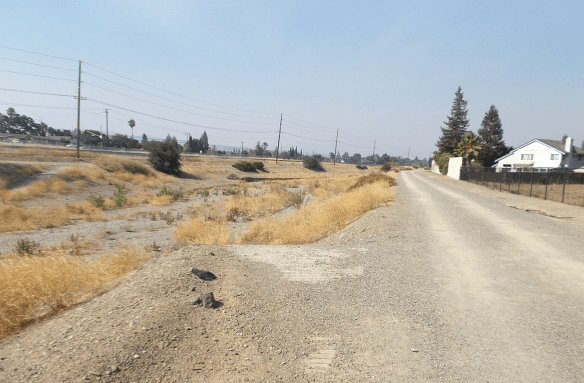
The Stanley Reach at Murrieta Blvd, August, 2015

The Stanley Reach at Murrieta Blvd, August, 2015

How the Arroyo Mocho Got Its Name                                                                                         According to Cassell’s Spanish Dictionary, “mocho” can have two connotations.  One is “cut short”, or “cropped off”.  According to the surveyor Sherman Day, the arroyo got its name because at its western end, about 2 miles from Livermore, it gradually sinks into the gravelly soil and seldom reaches a place where it connects on the surface with the Arroyo Las Positas or the Pleasanton marsh complex.                                                                     A more somber explanation is related by the local historian Anne Marshall Homan, but attributed to the local scholar Randall Millikin.  A second meaning of “mocho” is “mutilated”.  According to this story, a missionary priest from Mission San Jose (Father Cueva) and the Mission San Jose’s overseer (Ignacio Higuera) mistakenly wandered into a village of the unfriendly Luechan Indians, thinking they were friendly Asirins.  The unreceptive Luechans killed several of Cueva’s party, including Cueva, Higuera, and others.  Soldiers from the San Francisco Presidio came to punish the Luechans and recovered the body of Higuera, which had been cut into pieces (that is, mutilated).  Hence, the name “Creek of the Mutilated”.
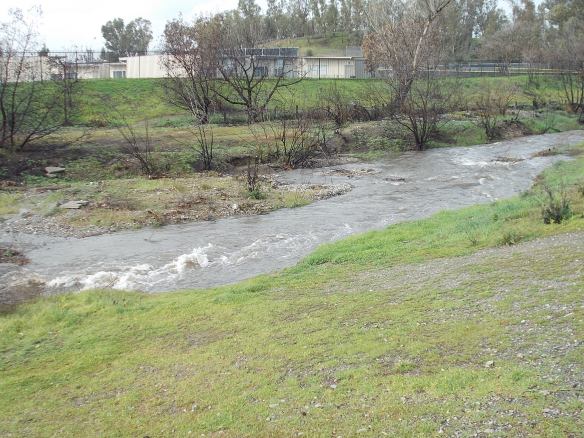
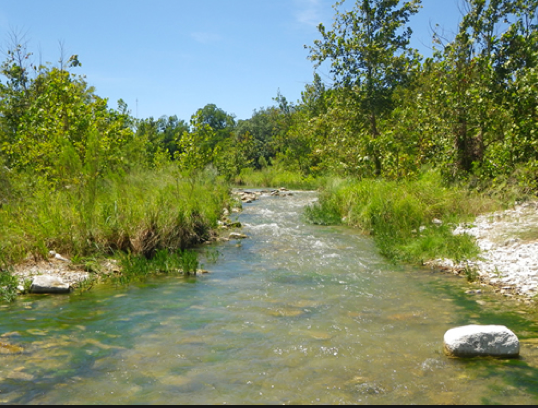
The Arroyo Mocho, February 2015

The Arroyo Mocho, February 2015

Screen shot 2015-07-30 at 6.32.13 PMWater in the Arroyo Mocho                         During the rainy season, the Arroyo Mocho was often gorged with water from occasional large rain storms in the hills and from neighbor- hood runoff.  Along with the Arroyo del Valle, it could turn into a raging torrent, threatening to flood out homesteads and drown unwary people caught in its flow.  In 1862, rain was so heavy that the valley was under water from Arroyo Road all the way to Pleasanton (but this was followed by a severe drought lasting the next two years).                                                                                                                         In 1907, heavy floods washed away part of the hillside on the east side of the cemetery at Oak Knoll, just downstream from the Granada Native Garden, and, according to the Livermore Herald, washed away a number of bodies, including a coffin, exposing the bones of its occupant.                                                                                                               As the city of Livermore grew, flooding from the arroyo continued to be an annual problem.  The Arroyo Mocho would jump its bank and flow down what is now South Livermore Avenue and flood First Street.  This problem was lessened when, in the 1920s, Henry Kaiser started mining gravels from the arroyo, thus deepening and widening the arroyo, creating more space for water to flow.  Later, in 1955, a storm drain system was constructed to handle residential runoff.  This prevented the city from being flooded during a big storm in December, 1955.  Finally, as described above, the Stanley Reach Flood Bypass Channel was constructed in the 1990’s, diverting water away from the residential areas in the Murrieta Meadows development.                                                                                  But in the summer, roughly from June thru November, the Arroyo Mocho is naturally dry, as the water it holds gradually disappears into the underlying gravelly water table.  Nevertheless, it may come as a surprise that a year-long supply of water in the Livermore Valley was never a problem, as it is now.  Water would still be present a few feet below ground level, allowing farmers to grow crops such as alfalfa without the help of irrigation.  A Livermore resident as late as the 1950’s describes the arroyo as “a series of ponds, and it would fill up with moss, and there would be lots of toads and then these side ponds would have the tiger salamanders.”

The Arroyo Mocho, July 2015

The Arroyo Mocho, July 2015

But it is not unusual, during the summer dry season, to still see water flowing down the Arroyo Mocho as it passes the Granada Native Garden, and visitors to the Garden frequently ask where the water comes from.  Summer water in the arroyo is water that has been purchased by the Zone 7 water agency from the State Water Project.  The water is pumped from the Sacramento-San Joaquin Delta into the South Bay Aqueduct, then is released as needed into the Arroyo Mocho and Arroyo del Valle.  The purpose of this release is mainly to help re-charge the water table under the Livermore Valley, from which the residents draw their water supplies, by percolating into the aquifer.  It is from this artificial reservoir that we Livermore residents draw our water supplies during the summer.  In dry, drought years, the release into the arroyo is turned off and water is pumped from the ground wells (thus continuing to deplete the water table).
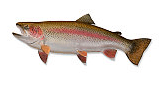
Steelhead trout

Steelhead trout

Steelhead Trout in the Arroyo Mocho? – Not an Impossibility!                                                Steelhead trout are anadromous (“a-NAD-ro-mus”), that is, they are born in fresh water, live there for 1-3 years, then migrate downstream to the ocean where they mature, then return upstream to fresh water between December and April to spawn (release their eggs and sperm, which become juvenile fish).  There is very good evidence that steelhead trout once swam up the Arroyo Mocho to a suitable spawning and rearing habitat in the upper Arroyo Mocho paralleling Mines Road.  They also migrated up the Arroyo del Valle, before the construction of the Lake del Valle dam, to the former Lake Tulare (in Pleasanton), which is believed to have been prime trout-rearing habitat.                                          This ended when the arroyos in Pleasanton were drained for development, and later when the dam at Lake del Valle was built in 1968.  This ended when the arroyos in Pleasanton were drained for development, and later when the dam at Lake del Valle was built in 1968.  Furthermore, steelhead are currently prevented from ascending Alameda Creek or entering the arroyos because of a grade control structure below the BART tracks in Fremont, for which construction of a fish ladder is planned.  In all, there were about eleven barriers that needed to be removed or modified between the San Francisco Bay and the upper Arroyo Mocho habitat in order for the steelhead to spawn there.                             In order to restore steelhead in the Arroyo Mocho and other streams, the Zone 7 Water Agency and other agencies have been removing concrete fish passage barriers and constructing a series of fish “ladders” to enable steelhead to return to their traditional spawning habitats.  For their part, the Lawrence Livermore National Laboratory removed one barrier on the upper Mocho near the Hetch Hetchy aqueduct many years ago.  Alameda County installed a fish ladder on the Mocho when they constructed flood control improvements, and the Zone 7 Water Agency recently removed a fish barrier on the Stanley Reach bypass channel.  Other agencies in the Fremont area have been removing concrete bariers and constructing a series of fish ladders.  But there are two remaining concrete structures in the Arroyo Mocho in the Livermore Valley, one at Stanley and Murrieta Blvd. at the old Southern Pacific Railroad Bridge (just downstream from the Granada Native Garden), and another near West Las Positas Blvd. and Highway 680, which need to be slotted so that the fish can get thru.  This will restore a more natural stream channel, planted with native vegetation to enhance fish and wildlife habitat.                         The hoped-for completion of this work is 2018.  Once it happens, all the fish will need is water!

Fish ladder on the Arroyo Las Positas, November, 2003

Fish ladder on the Arroyo Las Positas, November, 2003

Fish ladder on the Arroyo Mocho, November, 2003

Fish ladder on the Arroyo Mocho, November, 2003

The Arroyo Mocho – A Riparian Community                                                                              At one time, the Livermore Valley was a vast grassland covered with native grasses and wildflowers.  Surprisingly, the classic valley oaks were not common in the valley itself.  The clay soil of the northern part of the valley was too saturated during the rainy season for oaks; the gravelly soil in the southern valley drained too quickly to leave enough moisture for oaks.
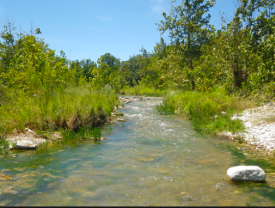
A typical riparian zone

A typical riparian zone

But oaks and sycamores tended to flourish along the banks of the Arroyo Mocho and Arroyo del Valle, which were flooded during the winter and spring, but where the gravelly soil drained quickly and there was a deep supply of water.  Such an environment constitutes a “riparian” zone.  A riparian zone is an environment in which there is a constant supply of water.  This water allows a community of plants and wildlife to thrive there, when they otherwise could not survive in nearby, drier ecological zones.

Even if the riparian zone is dry during part of the year, there is enough water near the surface to enable certain plants, and the animals that depend on them, to take hold and prosper.  Typical riparian plants native to California are willows, sycamores, alders, maples, ashes, cottonwood, sedges, rushes, cattails, monkey flower, dogwood and wild grape.  Typical animals are beaver, raccoons, fish, turtles, crayfish, ducks, swallows, warblers and blackbirds.

Unfortunately, like much of California, most of the vegetation we see in the Arroyo Mocho is made up of non-native weeds from other continents.  But we are able to identify a few California native riparian species growing among the weeds in the arroyo.  These include two types of willow (sandbar willow, and red willow or arroyo willow), cottonwood, western goldenrod, mule fat (Baccharis salicifolia), sagebrush, mugwort, black walnut, blackberry, and an occasional valley oak and coast live oak probably planted by man or beast.

The riparian zone at the Granada Native Garden

The riparian zone at the Granada Native Garden

The Granada Native Garden itself has a “riparian” zone, winding in and out of the oak woodland and grassland communities.  But it is riparian in name only, because it has no water source, only a rocky, simulated creekbed that is wet only when it gets rained on.  Nonetheless, the optimistic and enterprising GNG staff has planted a few riparian plants near that zone, in the hope that they will survive on the winter rains and an occasional drink provided by the dedicated staff.  With a little extra summer water and loving attention, riparian California natives might do quite well in your residential garden too!

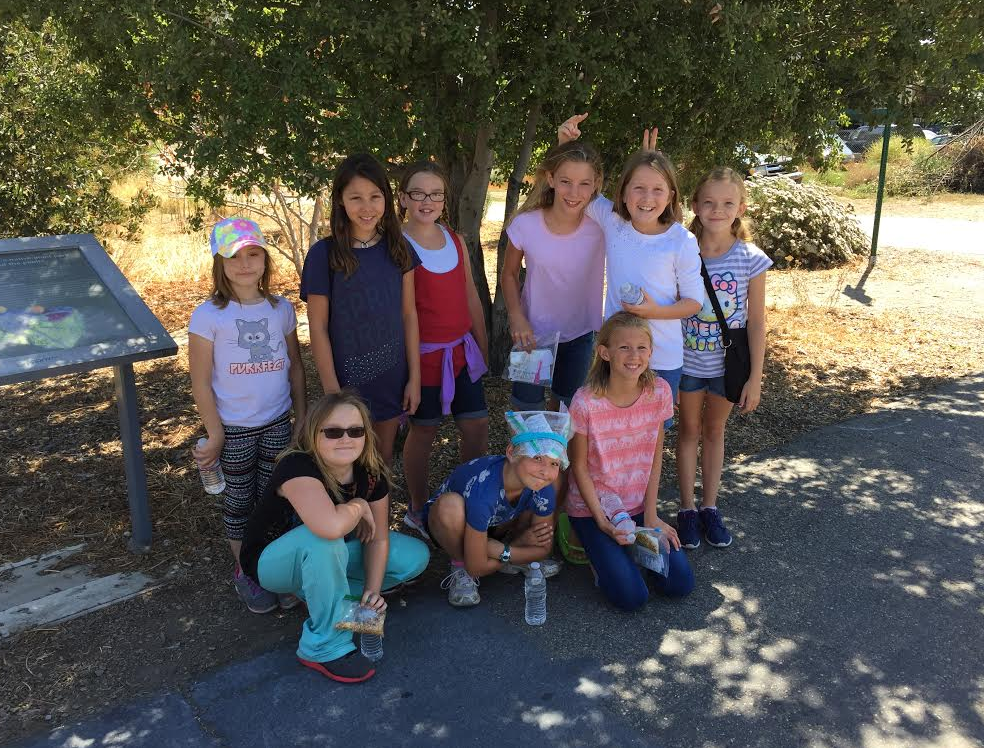
Young Visitors from the Church of Jesus Christ of Latter-day Saints                         Mormon kids            These inquisitive young students from the Church of Jesus Christ of Latter Day Saints, Livermore 3rd Ward, happened to visit the Granada Native Garden when most of the GNG staff was there.  This enabled them to take advantage of a guided tour of the Garden, learning something about the Native American uses of the plants that grow there, and about the sticky wonders of gumplant!

Quote du Jour                                                                                                                               “… the walks and drives along the sycamore and willow-lined banks of the winding Arroyo Mocho would render life ten thousand times worth the living.”                                                                   – San Francisco Call, 1865, a newspaper that served San Francisco

Guided Tours of the Granada Native Garden Are Available!                                                    Are you interested in seeing some of the plants that are described in this Newsletter or in past issues?  One or more staff of the GNG are routinely on duty at the Garden on Mondays and Thursdays, roughly between 10:00 AM and 12:00 noon.  But it isn’t very hard to arrange a guided visit at other times.  If you are interested in scheduling a visit, just email Jim at  JIMatGNG@gmail.com   .

Correct Restoration of the GNG’s eMail Address                                                                     The original email address of the Granada Native Garden has been mysteriously restored.  You can again reach the GNG staff at  JIMatGNG@gmail.com .

ALN Credit

Two Artemisias

Artemis, goddess of childbirth

Artemis, goddess of childbirth

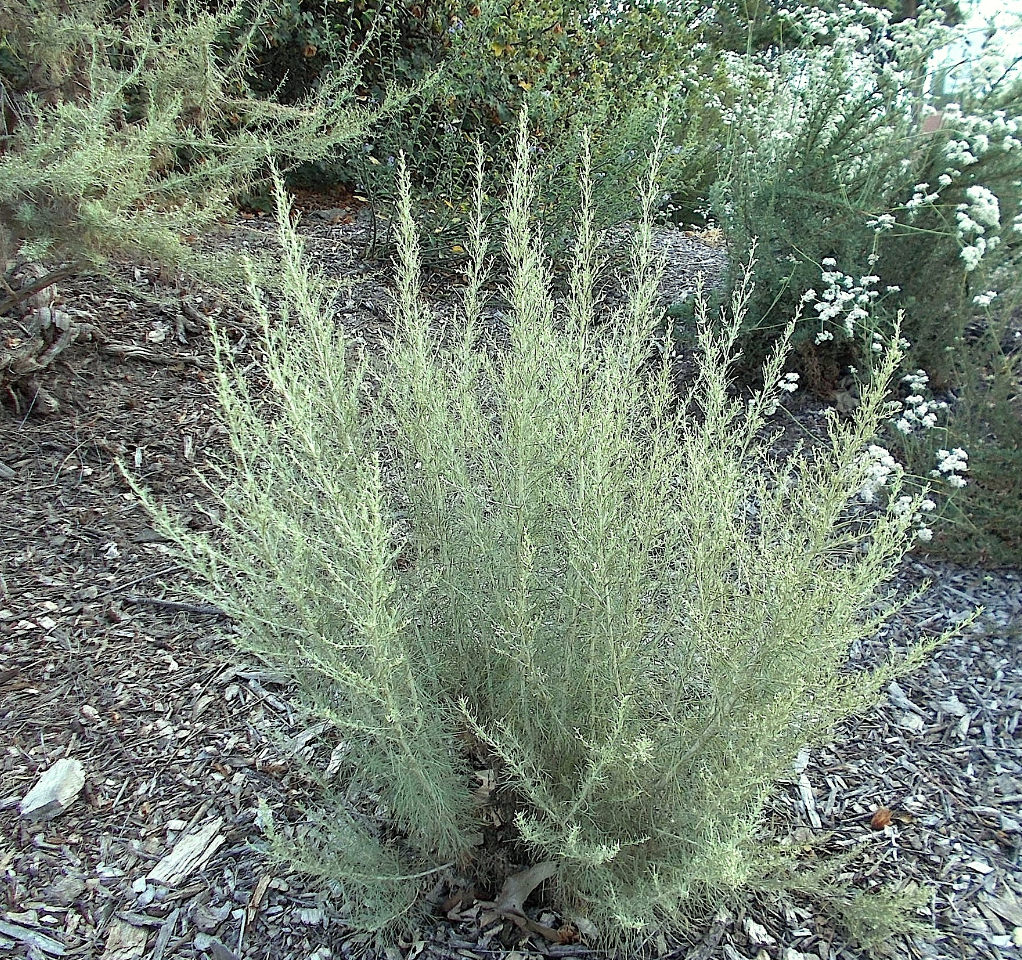
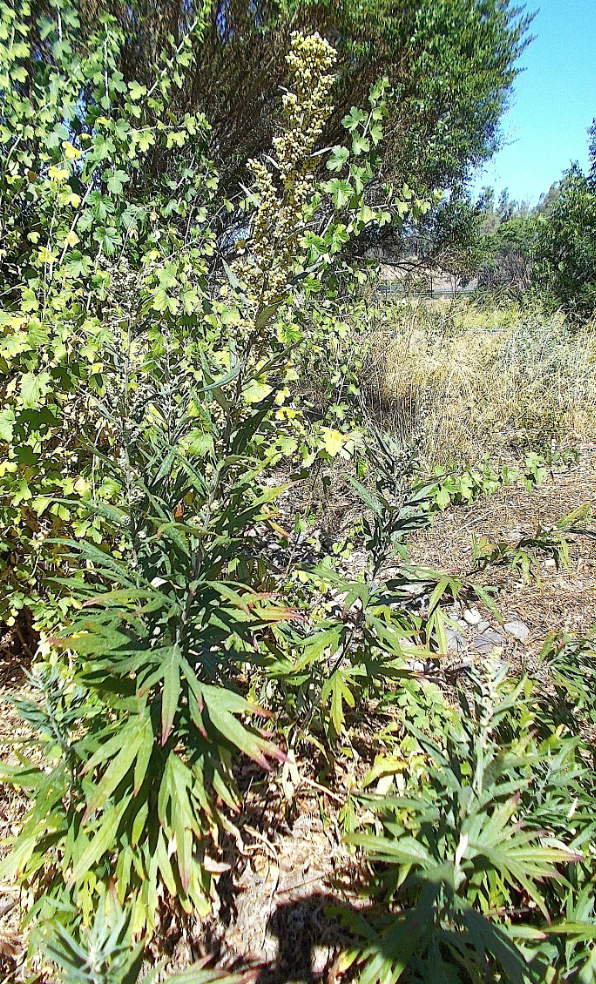
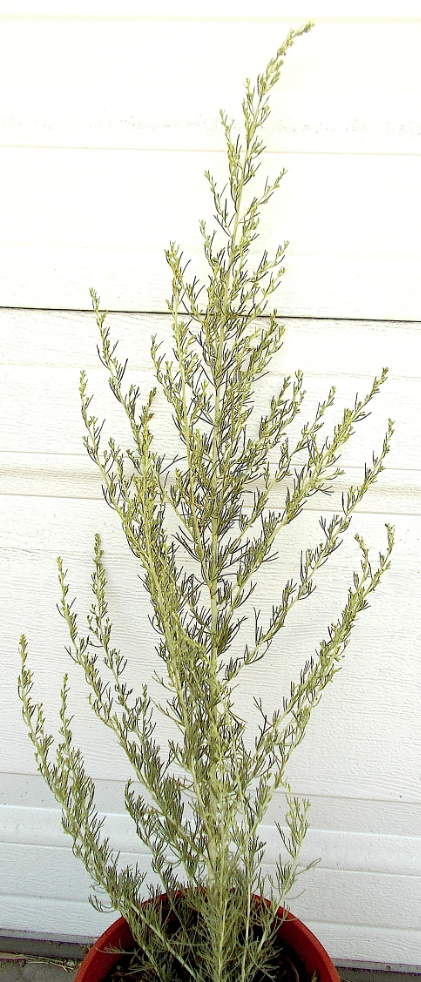
In Greek mythology, Artemis was the daughter of Zeus and the twin sister of Apollo.  Among other responsibilities, she was the goddess of hunters but also, curiously, of childbirth, and in some legends she is praised for giving young women who die in childbirth a swift and painless death. At the Granada Native Garden, there are two species of plants named after Artemis, but they are quite different in appearance.  Artemisia californica, or or sagebrush (also known as wormwood), has numerous but short, narrow leaves.  These tiny leaves enable sagebrush to endure hot, dry California summers by reducing the surface area from which water might escape; their pale green color reflect much of the summer heat and keep it cool.  As a result, sagebrush needs little water, and actually prefers no water in the summer.

Artemisia californica

Artemisia californica

Artemisia douglasiana

Artemisia douglasiana

On the other hand, Artemisia douglasiana, also called mugwort, has much larger, broader, darker leaves, and is better suited for growing in partially shady spots where there is a source of water nearby.  (Note:  For a better view, most photos can be enlarged by just clicking on them.)

Mugwort leaves

Mugwort leaves

A. cal leaves 1a

Sagebrush leaves

Artemis & Artemisia    What do the Artemisias   have to do with the goddess Artemis, the goddess of childbirth?                                         One thing that both Artemisias have in common is an interesting fragrance.    If you rub the leaves or crush them in your hand, you can’t miss it.  The fragrance is due to a number of  interesting chemical compounds (terpenes) present in the leaves, many of which are aromatic, such as camphor, camphene, eucalyptol, pinene and thujone.  Native Americans, who depended on native plants for food, medicine, shelter, tools and other needs, took advantage of these chemical constituents in many ways.  Many of these chemical compounds are potentially toxic or harmful, but in small amounts they have been proven to have extensive, clinically-verified medicinal value.

To answer the original question:  mugwort tea was drunk to treat premenstrual syndrome, to ease hot flashes and other menopausal symptoms, and to terminate difficult pregnan- cies.  An extract of sagebrush also was used to ease menopause and menstrual problems, to ease childbirth, and to “flush out the systems of newborns”.

The Many Merits of Artemisia                                                                                                     Although Artemisia californica is called sagebrush, not a true sage (Salvia spp.), it can be used in cooking as a spice and can also be made into a tea.  The leaves of sage- brush were burned to disinfect or fumigate a residence; similarly, during the Gold Rush, miners used it to drive fleas from their beds.  The Chumash used sagebrush for tools, arrow foreshafts, constructions and fuel.  In some cultures, mugwort was a symbol of peace, as the olive branch is to us now.                                                                                          But the most notable uses of both sagebrush and mugwort were their medical applications, in addition to those related to childbirth and women’s health issues, as mentioned above.  Sagebrush leaves were applied to the head for headaches.  Steam from boiling leaves was inhaled to ease coughs, or the leaves were chewed to fight coughs and colds.  Poultices of the leaves were used for toothaches, applied to the back to treat asthma, and as a bath for colds and rheumatism.  Sagebrush tea was used for bronchial troubles and as a sterilizing wash for wounds and swellings.                                            Native Americans lined their food storage containers with mugwort leaves in order to repel insects.  The Chumash used burning mugwort leaves to cauterize wounds or stop bleeding or prevent infection.  Have a headache or stuffy nose?  Try placing a leaf in each nostril!  In its various preparations, mugwort was used as a diuretic, a stimulant, to treat asthma, the flu, colds, bronchitis, fevers, and to relieve pain associated with headaches, broken bones, arthritis and rheumatism.  To treat a rash, a handful of fresh mugwort leaves was crushed with the hands and rubbed onto the rash; or alternatively, make a tea of the leaves and bathe the affected area.                                                                                                 Finally, the best treatment for malariaAnother species of artemesia, A. annua, long a traditional Chinese medicine, is being used as the most rapid treatment of all other current drugs against malaria. 

And Lastly, A Cure for Poison Oak!                                                                                             Some people today recommend mugwort as a treatment for a poison oak rash.  The rash is caused by an oil, urushiol, in the poison oak, and the terpenes in mugwort are believed to neutralize it.  Again, a handful of leaves is crushed and rubbed onto the skin soon after contact with the poison oak.                                                                                           The wide use of Artemisia by the indigenous people of many different countries has led toAbsorbine Jr. a number of clinical investigations into the pharmacological properties of this genus of plants.  The terpenes contained in these two Artemisia members, as well as other species of that same genus, have been found to possess anti-fungal and anti-inflammatory activity, as well as the ability to limit the growth of cells (cancerous as well as normal).  They can easily penetrate the skin, making them useful for topical application as well as for consumption as tea or inhalation as vapor.  Wormwood is another name for the Artemisias, and extract of wormwood is a frequent ingredient in over-the-counter treatments, such as Absorbine Jr., for “arthritis, aching joints, sore muscles, cramps, backache, strains and sprains, and foot pain”.                                   The seeds of the Artemisias are stimulated to germinate by wildfires that sweep over the ground.  Burned plants can re-sprout and keep growing.  The leaves that fall from the plants are allelopathic – that is, the terpenes they release inhibit other plants from growing around the shrub.

Quote du Jour                                                                                                                               “Western culture’s indebtedness to native cultures is immense.  Many plant-derived pharmaceuticals were first discovered by traditional healers in indigenous societies, and many of our food crops were domesticated thru indigenous horticultural activities.  Modern genetics has often tapped indigenous peoples’ intricate knowledge of minute and often hidden differences in species.”                              – M. Kat Anderson, Tending the Wild

Guided Tours of the Granada Native Garden Are Available!                                                     Are you interested in seeing some of the plants that are described in this Newsletter or in past issues?  One or more staff of the GNG are routinely on duty at the Garden on Mondays and Thursdays, roughly between 10:00 AM and 12:00 noon.  But it isn’t very hard to arrange a guided visit at other times.  If you are interested in scheduling a visit, just email Jim at  JIMatGNG@gmail.com . ALN Credit   Screen shot 2014-04-17 at 8.05.51 AM

Our Lord’s Candle

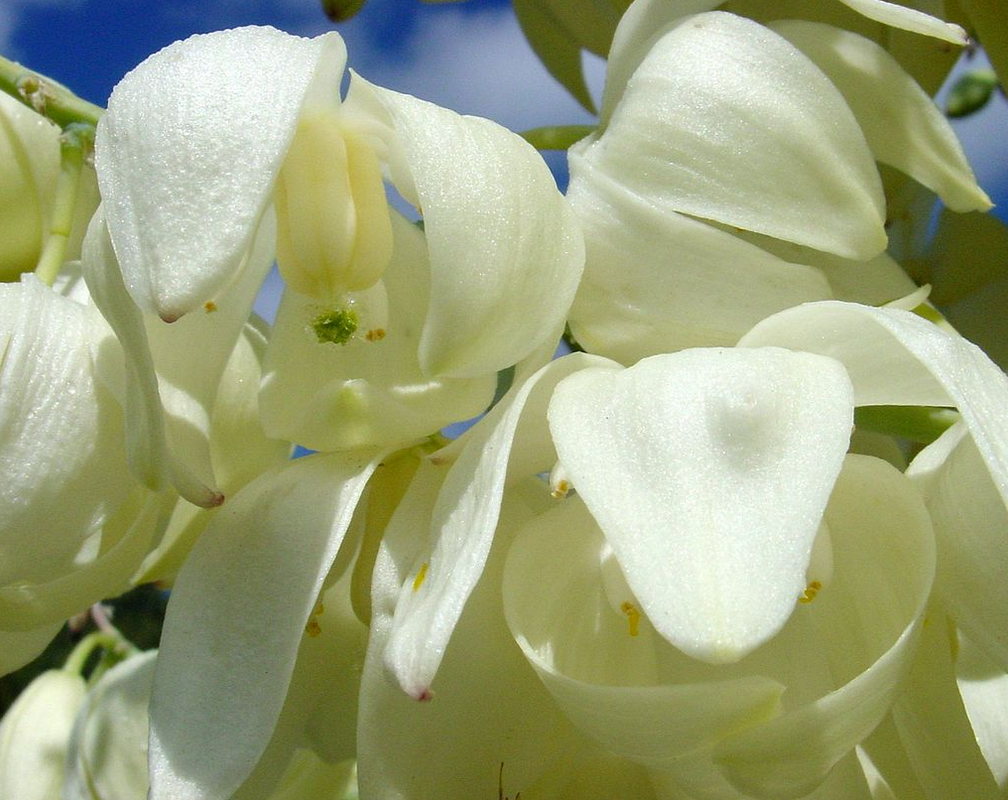
Hesperoyucca & Jen           Pay a visit  to the Granada Native Garden soon, before this is gone!  With its sensational 10-15 foot tall flower stalk, viewed from a distance, Hesperoyucca whipplei can resemble a candle with a creamy white flame.  It takes 5-10 years from the time of planting for Our Lord’s Candle to reach maturity and produce a flower stalk.  But once it reaches this point, the stalk can suddenly pop up in a matter of about two weeks.  (Note:  Most photos can be enlarged by clicking on them.)                               Another name for this   plant, however, is “Spanish Bayonet”.  This is because the leaves, which form a dense rosette at ground level, are stiff and narrow, have saw-toothed edges, and terminate in a very sharp point similar to a cactus needle.  So view it from a safe distance!  Some Native Americans used a yucca Leaf tipneedle for ear-piercing and tattooing.  Bert Wilson of Las Pilitas Nursery suggested a novel use for this plant:  a hedge of them planted around a prison could take the place of an 8-foot wall capped with razor wire or broken glass, and be “a great deal more neighborly”.                                                                      (This is the third time in the past six years that our specimen has produced a flower stalk.  However, the first two times, vandals broke it down and left it lying on the ground.  How they did this without getting impaled on the leaves is unclear to me! )

A yucca moth

A yucca moth

A Striking Example of Symbiosis                                    The upper third or one-half of this spike consists of a spectacular display of hundreds of white to purplish flowers, several feet long.  The blossoms are pollinated at night by the California yucca moth (Tegeticula maculata).  The female moth collects sticky pollen grains from the blossoms of one plant and forms them into a massive ball on the underside of her head.  She then flies to a blossom of another plant and inserts a single egg into the ovary of the blossom.  She rubs the mass of pollen against the ovary, thus fertilizing the ovary.  The ovary will now produce many seeds which develop into fruits.  When the moth larva emerges from its egg, it feeds on the fruits, most of which remain uneaten and are capable of producing new plants.  Thus both the plant and the moth benefit from this relationship, which is called symbiosis.  When the larva matures, it burrows out of the fruit, metamorphoses into an adult moth, and the cycle continues. Over evolutionary time, yucca moths and yuccas have evolved complete mutual dependence on each other (“obligate mutualism”).

Two Ways to Reproduce Itself                                                                                                     After the flowers have been pollinated (sexual reproduction), the Hesperoyucca Blossoms 3whipplei plant slowly dies, altho the flower stalk may remain in place for several more years (unless some ignorant burnouts come along).  However, rosettes of new plants grow out at the base of the old plant (asexual reproduction).  Hespero-  yucca whipplei is native to the south- ern part of California and Baja Cali- fornia.  If it is planted in a part of the state where yucca moths are not native, the plant might have to rely on new rosettes for reproduction.  Over time the rosettes accumulate to form an impenetrable barrier to foot traffic (but also present a serious hazard to the unsuspecting, especially children, because of their sharp leaf tips).

Native American Uses of Hesperoyucca whipplei                                                                      Among the Native Americans, the stiff leaves of Our Lord’s Candle provided fiber for making sandals, cloth, fishing lines, nets and rope.  The flowers and the stalk are edible.  The seeds were roasted and eaten whole or ground into flour.  When the seeds mature into fruits, they can be eaten raw, or roasted, or pounded into meal.                                    In 1769, the Spanish soldier and explorer Pedro Fages reported that the roasted plant “is juicy, sweet, and of a certain vinous flavor; indeed a very good wine can be made from it.”

Pop Quiz!                                                                                                                                       Without looking back, can you explain what is meant by the relationship called “symbiosis”?  Also, can you explain why this example of symbiosis is also called “obligate mutualism”?                                                                                                                                     Also, make sure you understand the difference between sexual and asexual repro-duction so that you can explain it to someone else (especially to a young person!).  If you aren’t sure, study that paragraph again carefully.

Quote du Jour                                                                                                                                “If we humans are capable of turning hundreds of millions of acres of rainforest into depleted grasslands, and extirpating millions of buffalo from the plains, and billions of passenger pigeons from the skies and cod from the North Atlantic, we are also capable of returning native plants and insects to our gardens.”                                                                                                                                    – Douglas W. Tallamy, Bringing Nature Home

ALN Credit

Purple Needlegrass – Our California State Grass

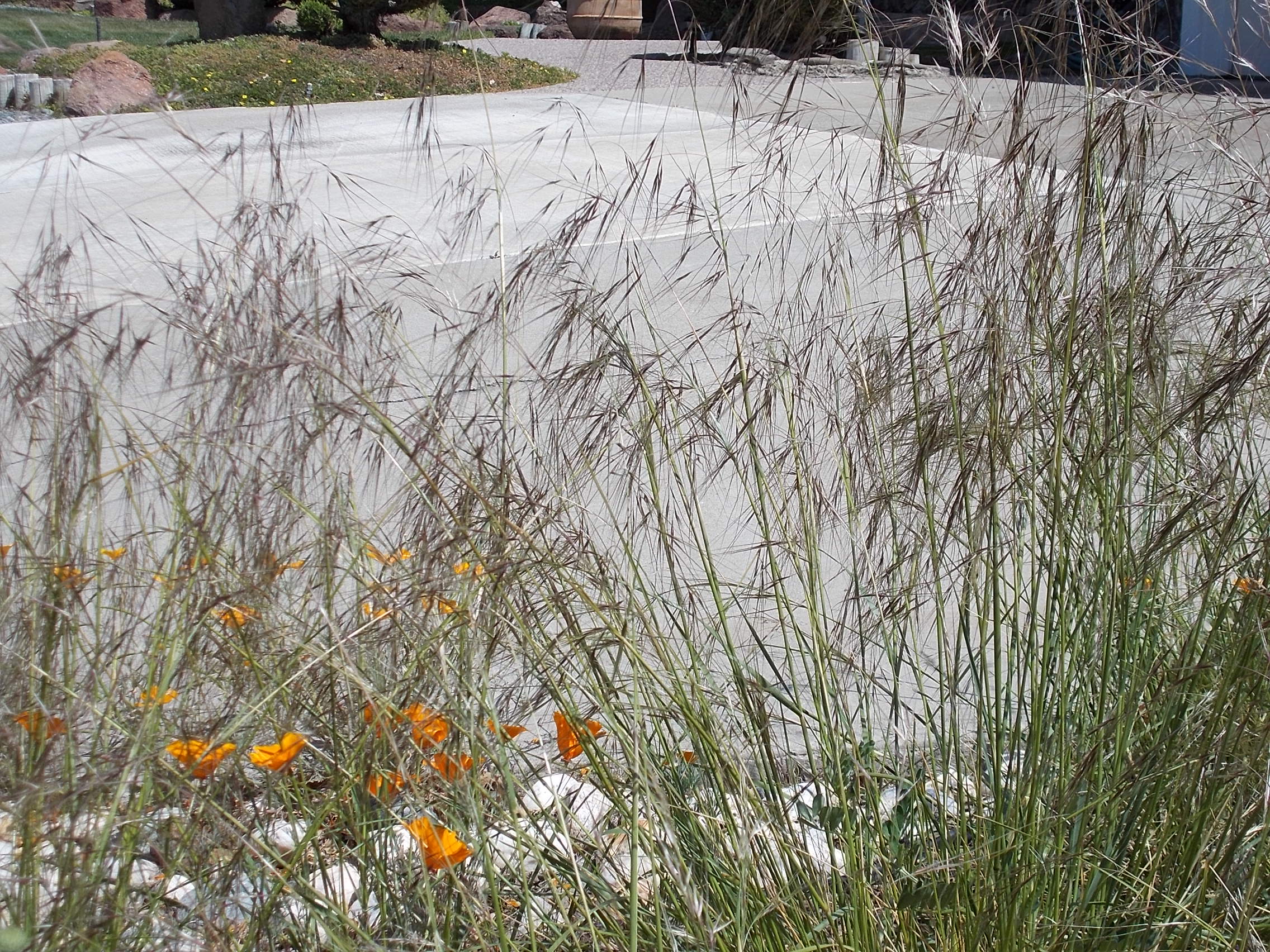
Needlegrass field

Purple Needlegrass Field at the GNG

               “Once there were fields of grass waving tall in the wind as far as the eye could see.  The Spanish travelers came and described them – the finest pasture, an abundance of pasture, enough for all the flocks and herds.  They brought their cattle and sheep, their horses and mules, and with them the weedy plants.  They began a process of change and a devastation that was left to us as a legacy.  The needle grasses and wild rye disappeared and we were left with foxtail and Medusa’s head.  The June grass, blue grass and poppies have gone.  We have inherited the poverty grass, tarweed and thistle.”                                                                                      – Raymond F. Dasmann, The Destruction of California

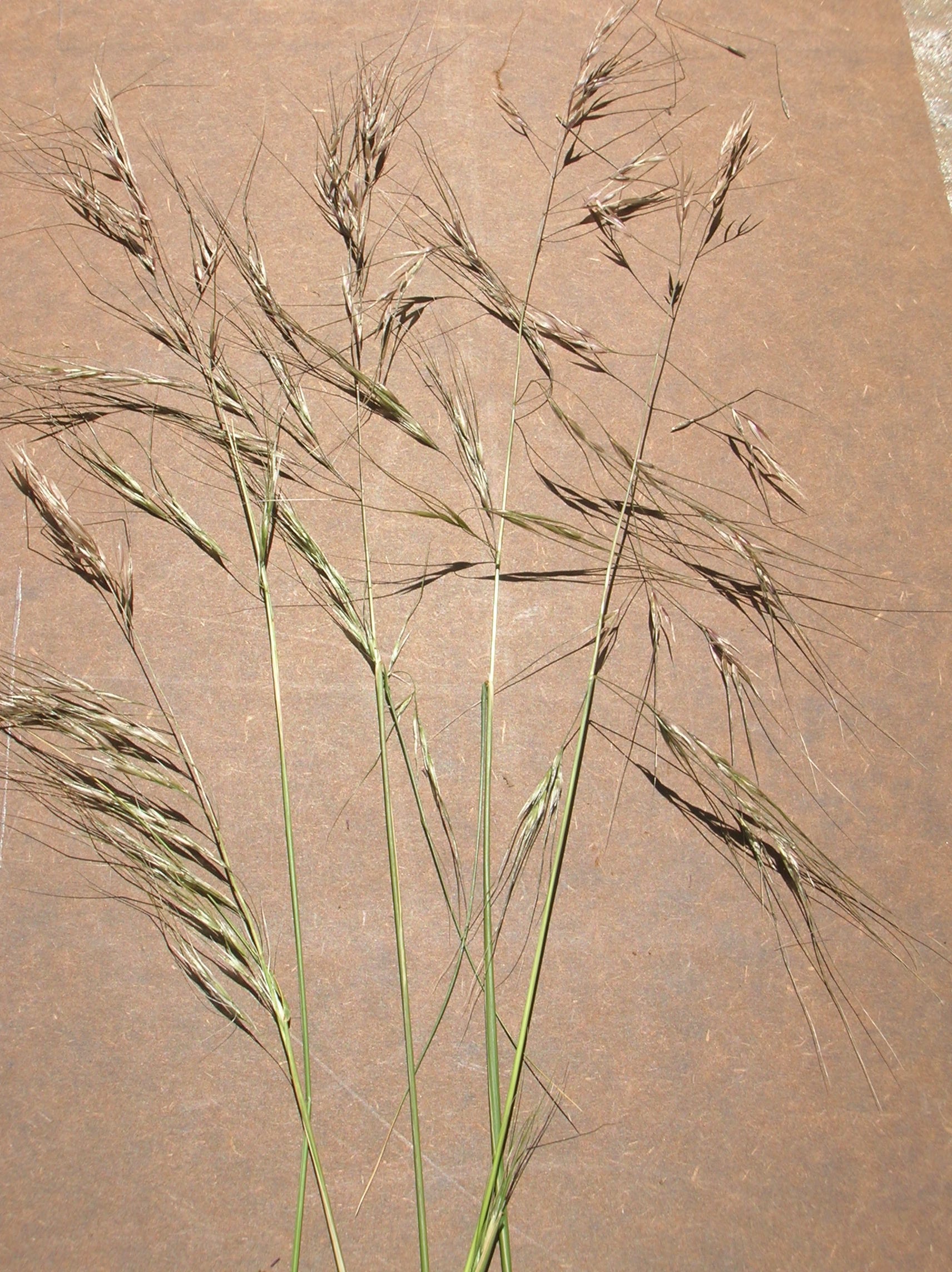
Needlegrass texture 1            The majestic and widespread grasslands that carpeted the California land- cape for centuries before the European invasion are gone.  But the individual grasses are still here, and in recognition of their historical and environ- mental importance, the Cali- fornia legislature in 2004 declared that the most domi- nant native grass, purple needlegrass (Stipa pulchra, formerly known as Nassella pulchra), as the official state grass.  (Remember that a photo can usually be enlarged just by clicking on it.)

Why Purple Needlegrass?                                                                                                            Even tho most people have probably never heard of purple needlegrass, this grass was selected for many good reasons.  For one, it was the most widespread perennial native grass found on the grasslands of California before the alien annual grasses were introduced from other countries.  It is still the most common native bunchgrass in places where it has not been crowded out by the alien non-natives.  The flowers have a slight purple cast when they are young, but from a distance a field of needlegrass can have a silvery sheen.  Its roots may go down as far as 16 feet where it can find water to survive the dry California summers.  Its large, fibrous root system makes it useful for preventing soil erosion in sites with poor soil conditions and low fertility.  It provided valuable forage for deer, elk and other wildlife.Stipa seeds  So it is an excellent representative of California’s heritage.

           An acre of purple needlegrass may yield 200 or more pounds of seed.  This prolificacy made it an important food source for the Native Americans, who would store the dry seeds for months, then toast them or grind them up to make a pinole.  If the dry grass was burned in the fall, it tended to produce an even more abundant seed crop the following year.  And it is the grass preferred by the California Indian Basketweavers Association for teaching children the art of basket weaving.

Complete Seed DrawingAnd … It Even Plants Itself!                                                   The needlegrass seed is attached to a very long stiff hair or bristle (awn) which develops two bends when the seed and awn dries out.  Changes in the moisture of the air between night and day cause the awn to alternately twist and unwind until it manages to strike the soil.  Over several days, this causes the seed attached to the awn to push downward into the soil.  Stiff hairs on the seed are pointed backward and prevent the seed from backing out.  This also protects it from birds and mice as well as from any wildfire that might sweep over the grassland.  So the seed doesn’t just fall to the ground and take its chances – it actually plants itself!  (Unfortunately, it also plants itself in your clothing as you walk thru it, and in your dog’s fur where it can work its way into the animal’s skin.)

Smith School, 4-22-15Smith School Visits the Granada Native Garden                                                                       Jo Lucas’s 5th grade science class from Smith School, in Livermore, spent the morning at the Garden recently.  This was a good time, because so many flowers are in bloom and the weather was so agreeable.  They toured all four plant communities of the Garden, learned about flower parts and flower reproduction, and explored the sticky wonders of our gumplant (Grindelia sp.).  Finally, the three mosaic tables at the Garden provided a good place to enjoy their lunch.

Quote du Jour                                                                “(Steve and Laurene Jobs) had planted wild grasses native to Northern California around the perimeter of the property.  Some neighbors grumbled at first, but most came to appreciate the way the color and character of the vegetation would change with the seasons.  In spring the plantings would explode with wildflowers, and in summer the untrimmed clumps of grass would shimmer in the wind.”                                                                                           – Brent Schlender & Rick Tetzell, in Becoming Steve Jobs, p. 148

♥  Special thanks to Lewis Reed, PhD, for his professional information about purple needlegrass, and to Fremontia:  A Journal of the California Native Plant Society, Vol.9(1):3-6, 1981, for the illustration of the needlegrass seed.

Changes in the GNG’s EMail Address                                                                               Due to unexplained technical complications, the email address to Jim at the Garden has undergone a couple of changes.  The new email address is:  JIMatGNG@gmail.com.  This will not affect comments that are sent related to the Newsletter.

ALN Credit

Screen shot 2014-04-17 at 8.05.51 AM


Two Surprise Appearances!

Layia single           This Fall, the GNG staff planted some individual pots of known wildflowers, but they also broadcast some wildflower seed mixtures whose composition was not exactly known by the staff.  We knew what we would probably see in the Spring, but in the latter case, we might be in for some surprises.  The latter case prevailedHere are our discoveries, so far.

Tidy Tips                                                                                                                             Layia cluster           Tidy tips (Layia platyglossa) is one of the later-blooming native California wild- flowers — later, that is, than the earlier blooming goldfields, lupine, fiddleneck, baby blue eyes and five-spot that were featured in our previous post (see “Return of the Wild- flowers”, posted on March 19, 2015, archived in March, 2015).  It hangs around for a long time during the late winter and early spring, and competes favorably in identify-ability with goldfields. You can figure out why someone once named it “tidy tips”!  (Remember, you can enlarge most photos by clicking on them.)

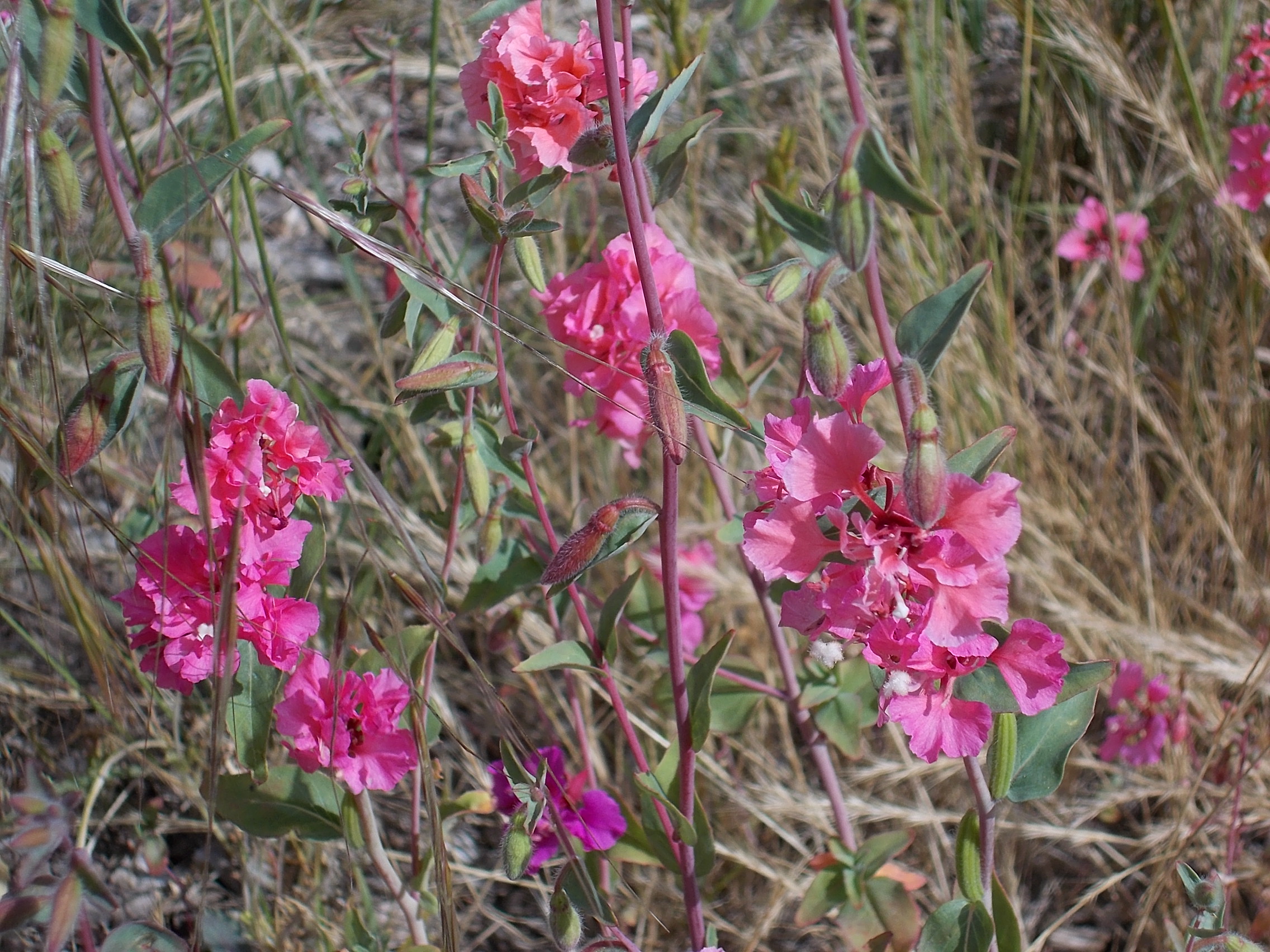
Mountain Garland                                                                                                              Mountain garland           This is one form of the genus Clarkia that was featured in an earlier post (“Clarkia – A Native Flower with a History”, posted on May 4, 2014, archived in May, 2014).  The flower has its petals arranged in a fan-like arrangement, rather than a cup-shape.  The Clarkias bloom later in Spring, but the mountain garland (Clarkia unguiculata) blooms earlier than the later-blooming “Farewell-To-Spring” (Clarkia amoena).

“Bush Poppy?  I Have To Have One Of Those!”                                                                         Recently Willi and her young charge, Madison, stopped at the GNG for their lunch break.  Afterward, they toured the Garden and noticed the different plants that were in

Madison (on the left) and Willi

Madison (on the left) and Willi

bloom, and studied the ID markers that told them about the plants.  Willi spent a lot of time admiring the bush poppy (see “The Ever-Blooming Bush Poppy”, published on February 3, 2015 and archived in February, 2015).  It’s bright yellow flowers prompted her to find one for her yard too.  (Bush poppies are not readily available at all native nurseries, and might be a bit hard to get established, but they are surely worth the try.)                                          At this time in the Granada Native Garden, the early blooming wildflowers are be- ginning to shut down for the season.  Soon they will mature and release their seeds for next year’s display, but are about to be replaced by the red, pink and white Clarkias (the mountain garland was first noticed in bloom on March 30; the farewell-to-spring should appear very soon), and the tidy tips seem to want to hang around well into Spring.  Hopefully the evening primroses, and the one (currently) buckeye tree will be in bloom.  We have seen monarch butterflies searching for the milkweed, buckeye butterflies and lots of bees visiting the holly-leafed cherry, and pairs of lesser goldfinches are breakfasting every morning on the ripening seeds of the fiddleneck.  The flannelbushes are in full bloom now.  There is always something going on there!

Quote du Jour                                                                                                                               “As we passed below the hills the whole plain was covered with great patches of rose, yellow, scarlet, orange, and blue.  The colors did not seem to mix to any great extent.  Each kind of flower liked a certain kind of soil best, and some of the patches of one color were a mile or more across.  My daddy had traveled a great deal, and it was not easy to get him excited about wild flowers or pretty scenery.  But he said that he would not have believed that such a place existed if he had not seen it himself.”                                              – From the journal of Jeff Mayfield as his family first encountered the San Joaquin Valley in 1850; quoted from the website of the Larner Seed Company.

    ALN CreditScreen shot 2014-04-17 at 8.05.51 AM

The Return of the Wildflowers

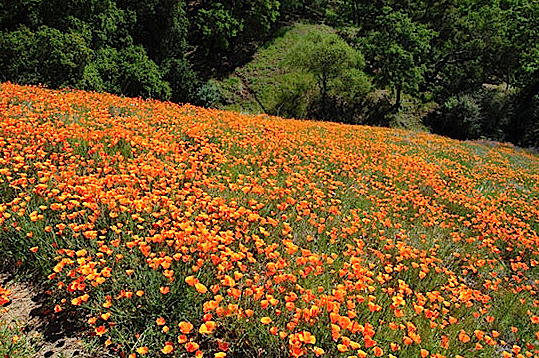
A hillside of California poppies

A hillside of California poppies

The first explorers in California marvelled at the display of wildflowers that illuminated the landscape every Spring.  On record are reports of vast fields filled with golden poppies and bright yellow goldfields.  “Early California was a massive flower garden.  Densely growing native wildflowers and grasses of hundreds of varieties at one time covered large areas of ground, not just in open grasslands but also in the forests, oak woodlands and chaparral.  John Muir dubbed the state ‘the Pacific land of flowers’.”      (M. Kat Anderson, Tending the Wild).

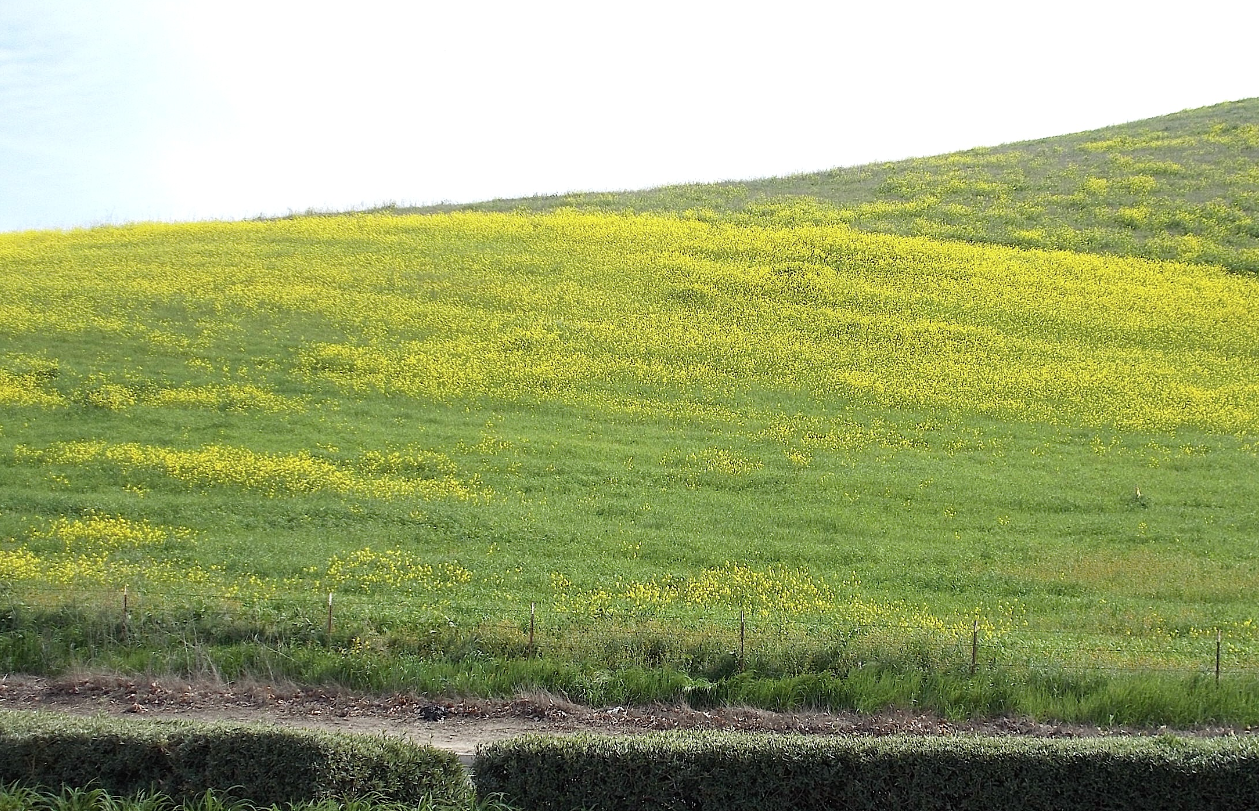
A hillside of European mustard

A hillside of European mustard

Vast fields of yellow can still be found on California hillsides.  But it’s a good guess that they are not the native California poppies and goldfields, but the invasive non-natives field mustard (from Europe) and oxalis (also called Bermuda buttercup, but it’s from South Africa) which have hijacked the California landscape.                                                                 California native wildflowers are still plentiful, but you have to know where to look.  One of those places is the Granada Native Garden, where we are successfully establishing populations of wildflowers that re-seed themselves year after year, depending somewhat on the weather.                                      The wildflowers are short-lived, and they go to seed and dry up as soon as the weather gets warm – that’s part of their survival mechanism during the hot, dry summers.  So visit the GNG very soon to see them in their glory.  Several of the flowers are identified with markers that not only tell you their name, but also describe some of their interesting features, history and ethnobotany.
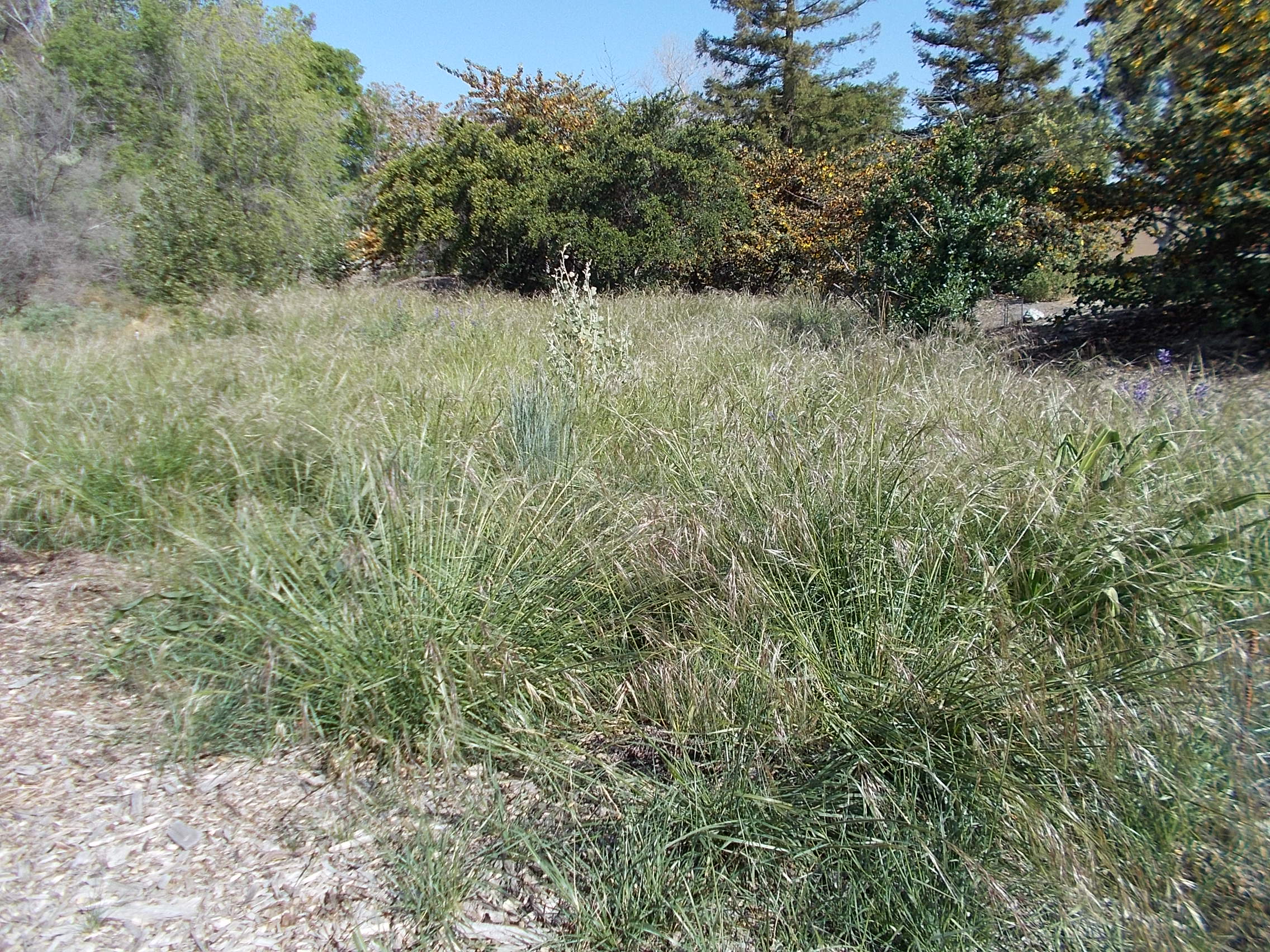
Current Attractions Now Showing!                                                                                  ID Markers           Here are a few of the native California wildflowers that used to be common features of the California landscape.  Many are in bloom now; some will bloom in a few weeks, or later in the evening.  Remember that most photos can be enlarged just by clicking on them.  When you visit the GNG, you will notice identification markers in front of many of the plants (like the photo at the left).  The long, tube-like markers tell you more information about the plant than just its name; you may lift the marker off its support post if you are interested, then put it back on its post.   If you don’t see an ID marker in front of something that attracts your attention, continue strolling around the Garden and look for another location of the same plant.

Goldfields (Lasthenia glabrata)
The seeds of goldfields were a highlyGoldfields nutritious traditional food for the Native Amerticans of California.  Reportedly the seeds were ground up and mixed with water and seasonings to make a tasty pinole, either as a beverage or as a cereal resembling oatmeal.  In the Spring, extensive fields of goldfields created “a vast acreage of heavenly yellow.”  The blossom is also a nectar source for the endangered checkerspot butterfly.

Five-SpotFive-Spot (Nemophila maculata)
Wonder why this flower is called “five spot?  Look closely at one of the blossoms, and you will see!  Five-spot is one of the first flowers to appear in the Spring, and it produces seeds abundantly for the next year’s crop.  Birds relish the large black seeds.  And it’s an excellent choice if your child is inspired to start a garden of his or her own!

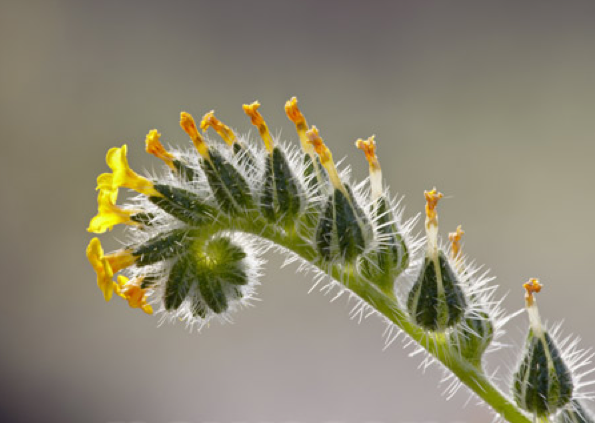
Fiddleneck (Amsinckia menziesii)
Fiddleneck is one of the earliest and mostFiddleneck common of the Spring flowers.  It gets its name from the shape of the yellow flower- head, which gets longer as it matures and curves downward – resembling the neck of a fiddle!  Native Americans harvested the seeds of the plentiful fiddleneck as a source of food.  Fiddleneck is also a host plant for the painted lady butterfly, and goldfinches visit the blossoms every morning.

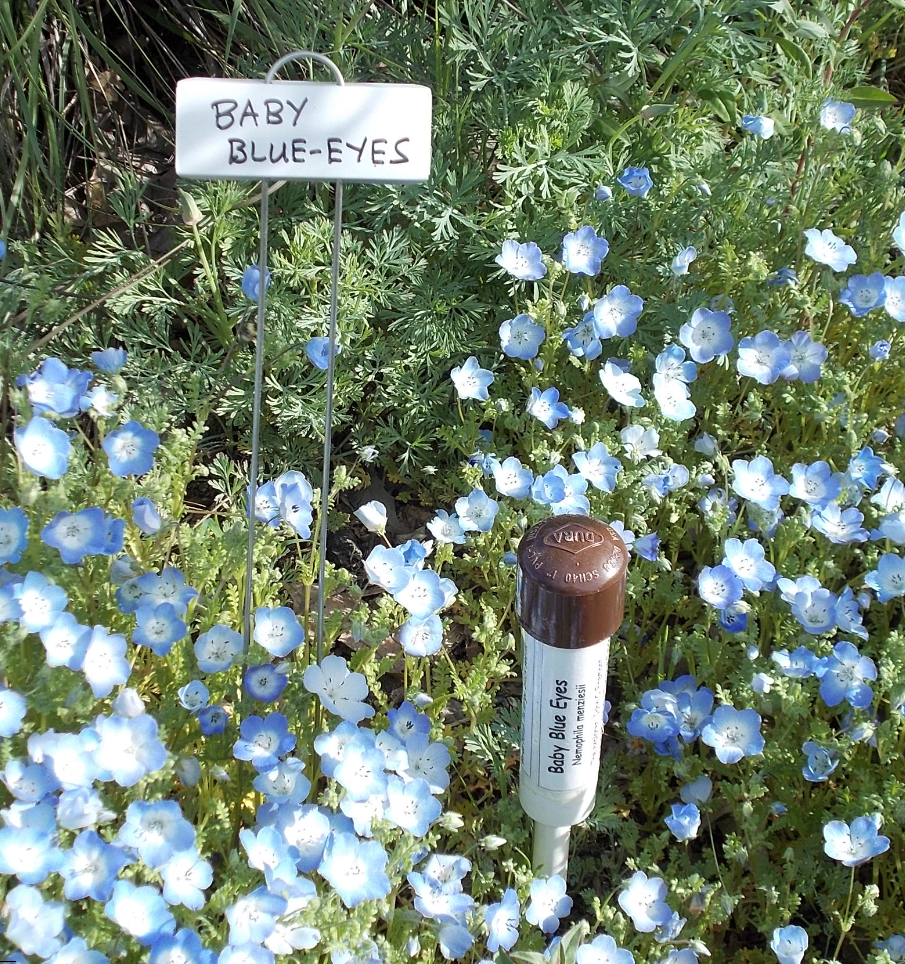
Baby Blue Eyes (Nemophila menziesii)
Baby blue eyesThe explorer John C. Fremont wrote in his journal, “The blue fields of nemophila and the golden poppy represent fairly the blue skies and gold of California”.  Baby blue eyes is one of the first flowers to appear in the Spring, and it pro- duces seeds abundantly for the next year’s crop.  Reportedly, sometimes the flowers are pure white or dark purple.  Birds relish its large black seeds.

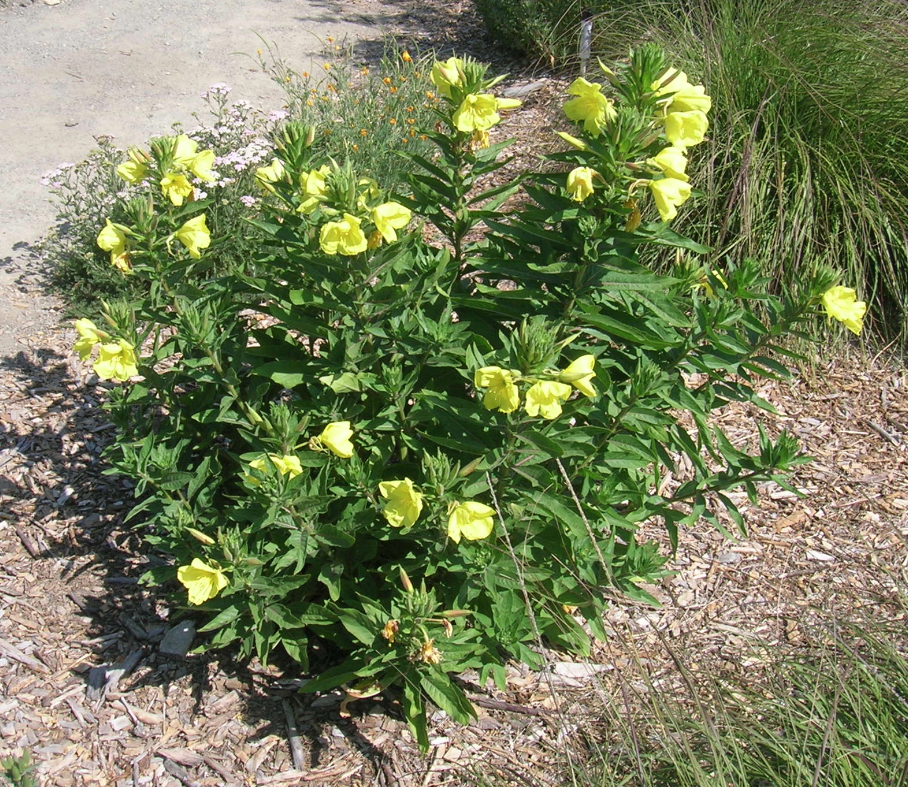
Evening primroseEvening Primrose (Oenothera hookeri)
Unlike most flowers that open in the  morning and go to sleep at night, the evening primrose is so-called because it opens at dusk.  This allows the nocturnal sphinx moth to pollinate the flower as well as to obtain nectar for itself.  The flower remains open for a while in the morning, and is also attractive to bees and butter- flies.  By noon, the flowers wither and the next set of buds gets ready to open.  This is one of the flowers that isn’t quite ready to bloom yet.

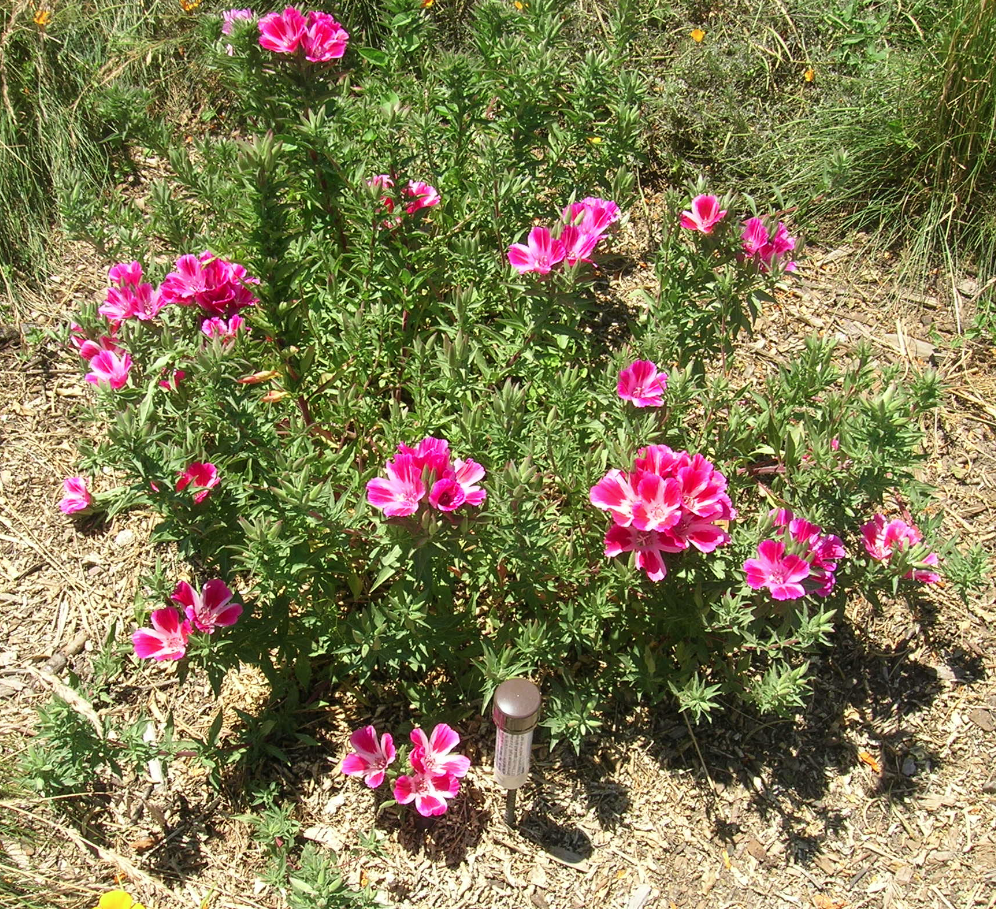
Clarkia, or Farewell-To-Spring (Clarkia amoena)
ClarkiaClarkia is named after William Clark, of the 1804 Lewis & Clark Expedition, who brought back specimens for President Thomas Jefferson.   Its common name is Farewell-to-Spring, because it flowers just around the time Spring is about to segue into summer.  In addition to their bright and showy blossoms, Clarkia seeds were a favorite food of the Native Americans – toasted and ground to make a cereal-like pinole or a beverage.  Thousands of charred Clarkia seeds were found in a late prehistoric cremation site in Pleasanton.  Native Americans also used fire to increase the abundance of Clarkia (and other edible and otherwise useful plants).  This is another one of the flowers that isn’t quite ready to bloom yet.   (For more information about Clarkia, see the post “Clarkia – A Native Flower with a History”, archived on May 4, 2014.)

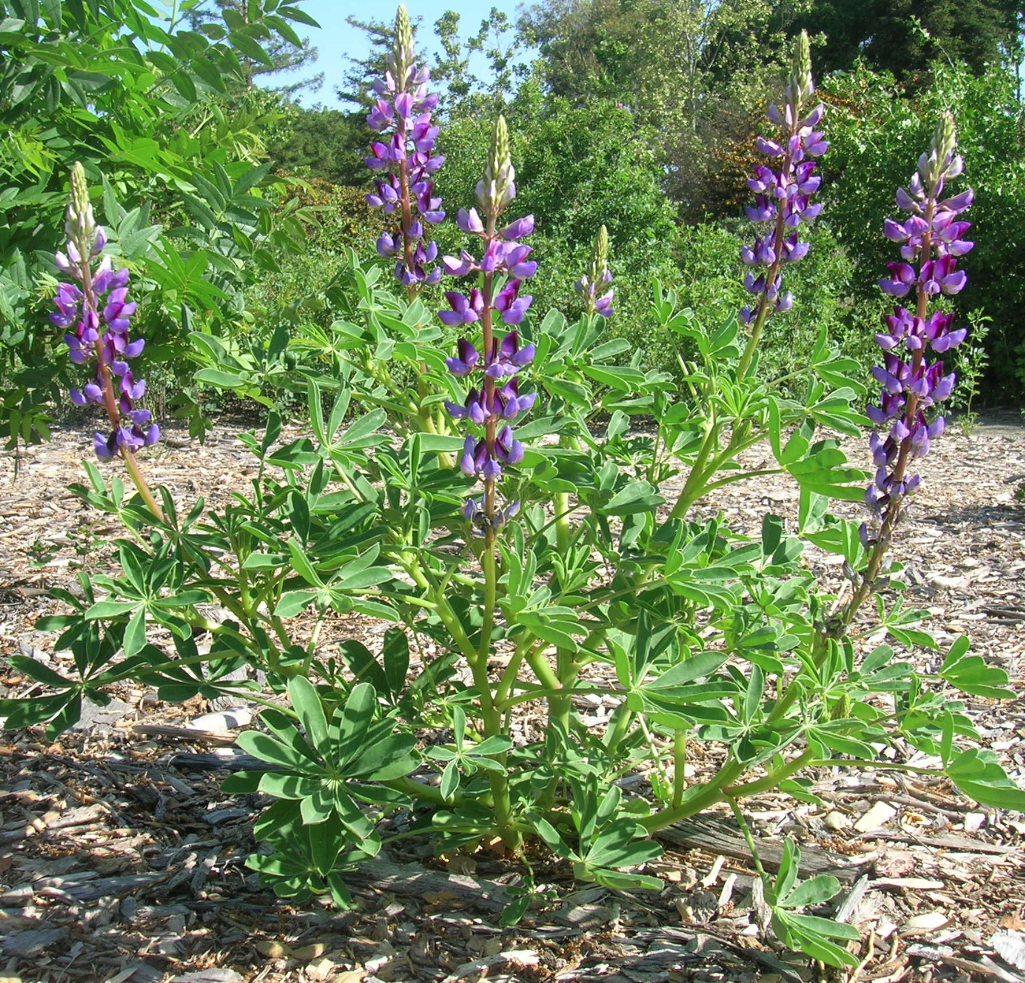
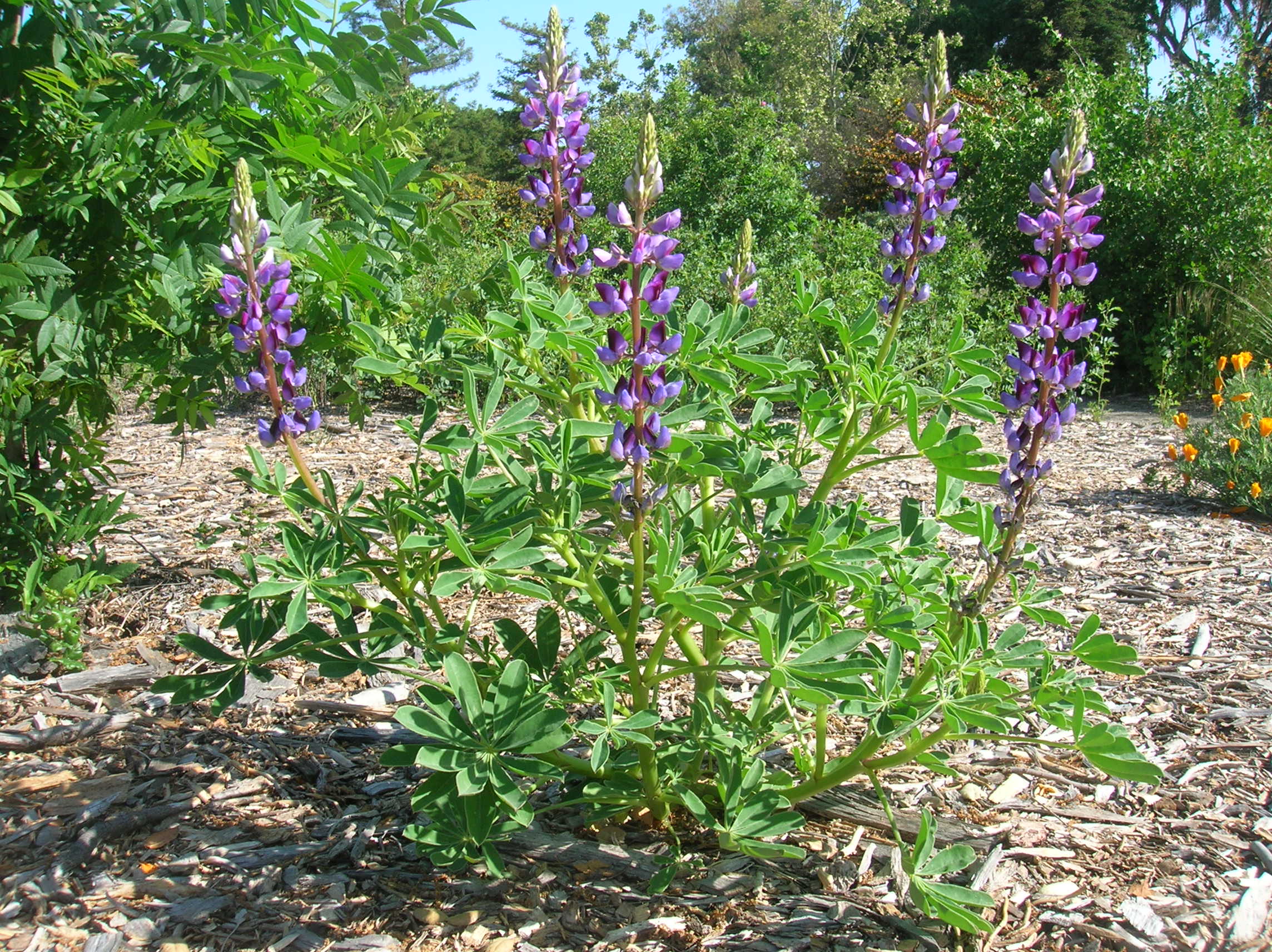
Arroyo Lupine (Lupinus succulentus)                                                                                         The name “lupine” comes from the Latin “lupus”, which means “wolf”, becauseLupine lupines grow in deficient, low-nutrient soil, and they were (incorrectly) blamed for the low quality of the soil!  Actually, lupines are legumes (members of the pea family), and like most of the members of that family, their roots have nodules that contain very unique bacteria that are able to convert atmospheric nitrogen into nitrate, a form that can be absorbed and used by the plant.  For that reason, legumes are commonly planted as a “green manure” crop in order to renew the nitrogen content of the soil in a garden.  So rather than depleting the soil, lupines actually restore it, especially for growing crops that have a high nitrogen requirement, such as cucumbers, squash, broccoli and spinach.  (For more information about lupine, see the post “Lupine – Friend or Foe?” archived on April 29, 2013.)

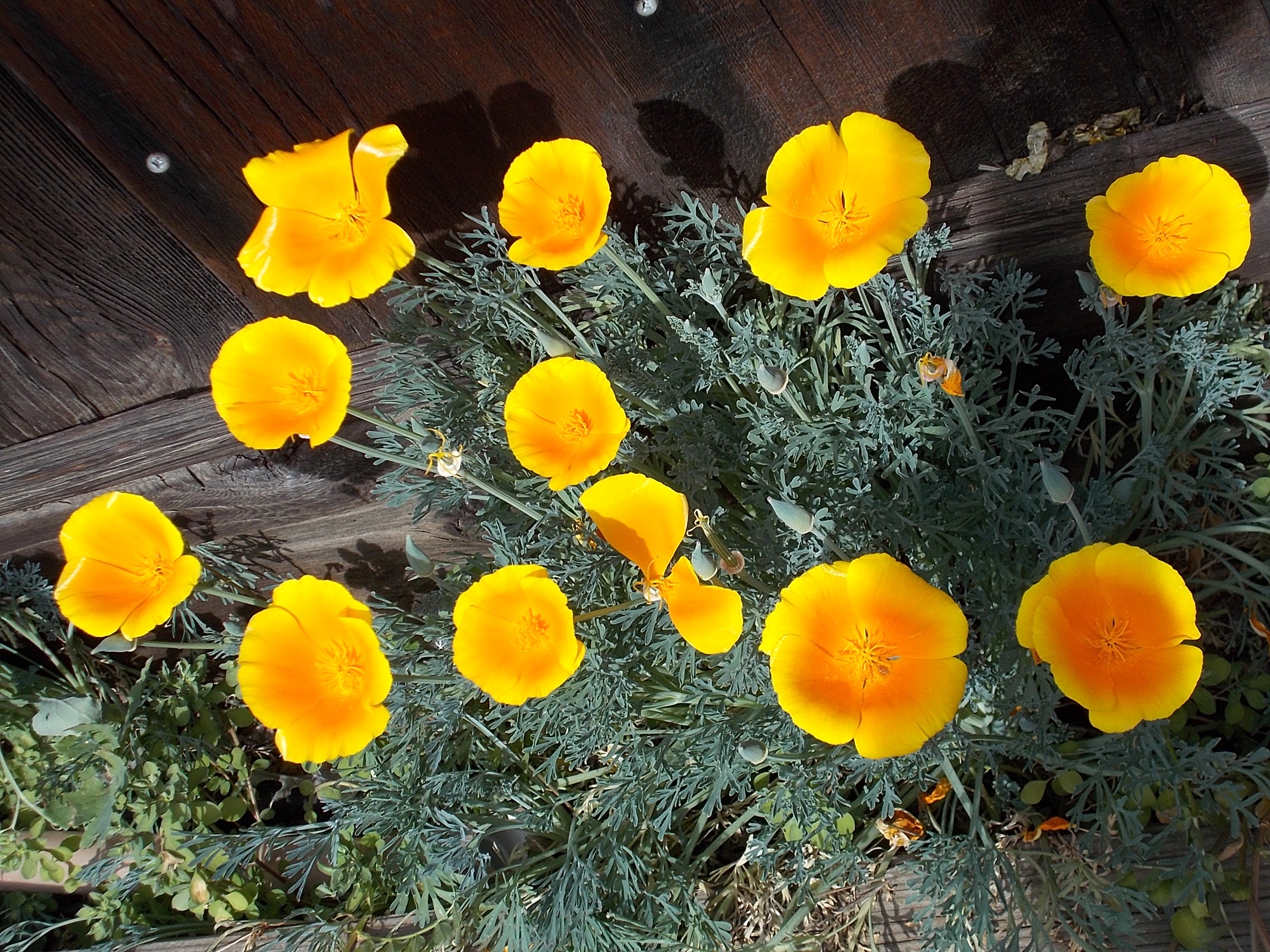
California Poppies (Eschscholzia californica)
Last but not least, and in need of no introduction, the California poppy is the state flowerPoppies of California!  It was named by a German botanist in honor of another botanist, Johann von Eschscholtz.  The flowers close at night, but open again in the morning when the sun is up and the evening chill is gone.  Native Americans used the leaves medicinally, the seeds in cooking, and the pollen as a bright yellow cosmetic (For more information about poppies, see the post “Celebrating Poppies” archived on March 15, 2013.)

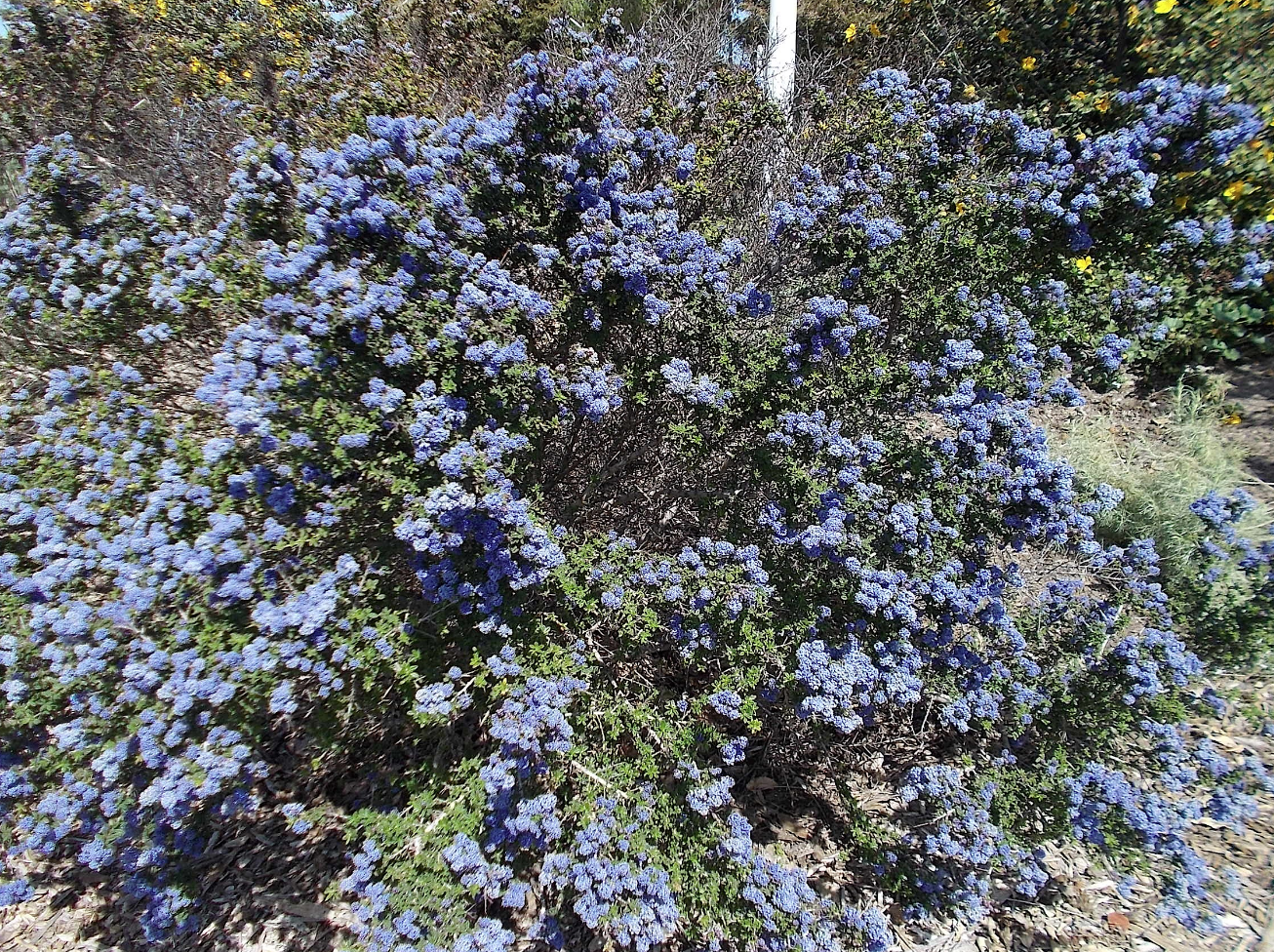
Ceanothus 'Dark Star'

Ceanothus ‘Dark Star’

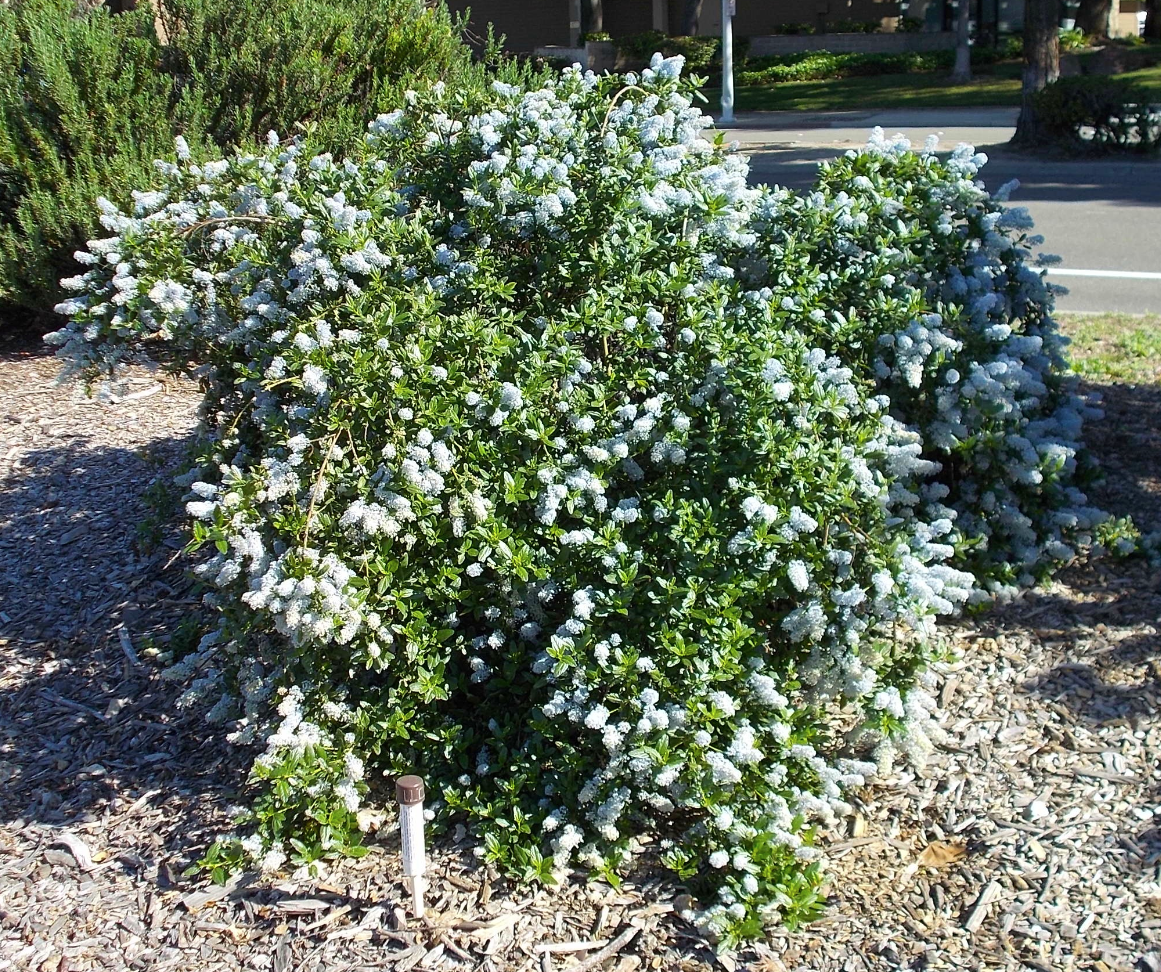
Also Now Showing . . .                                                     While you are visiting the Garden, there are a number of other native plants that are currently in bloom, in addition to the ones pictured above.  Maybe some would look good in your home landscaping!  Among the most memorable are the Ceanothus varieties, also named California lilac; see the photos below.  The others aren’t pictured here, but there are ID markers at each one to tell you something about it.  Here is a list:  California lilac ‘Dark Star’, California lilac ‘Snow Flurry’, California lilac ‘Yankee Point’, Golden currant, Bush poppy, Flannelbush, Purple sage, yarrow, snowdrop, and last but not least, the lowly June grass.  Explore the Garden and find things you’ve never seen before!
Ceanothus 'Yankee Point'

Ceanothus ‘Yankee Point’

Ceanothus 'Snow Flurry'

Ceanothus ‘Snow Flurry’


More Help Needed at the GNG!                            The Granada Native Garden could use an extra set of hands and feet to do whatever needs to be done at any time of the year – preferably on Monday mornings when Jim is there irrigating plants.  Currently weeding is the priority.  If you are interested in volunteering on a fairly regular basis, please contact Jim at < JIMatGNG1@gmail.com >.
ALN Credit

The Ever-Blooming Bush Poppy

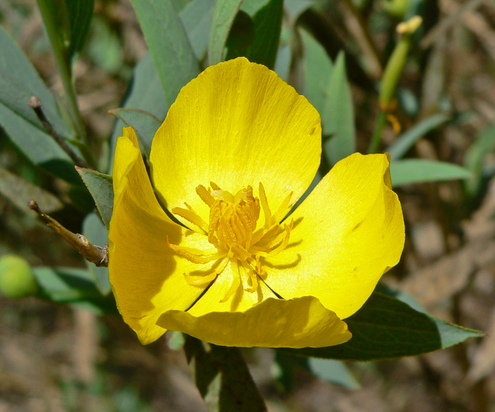
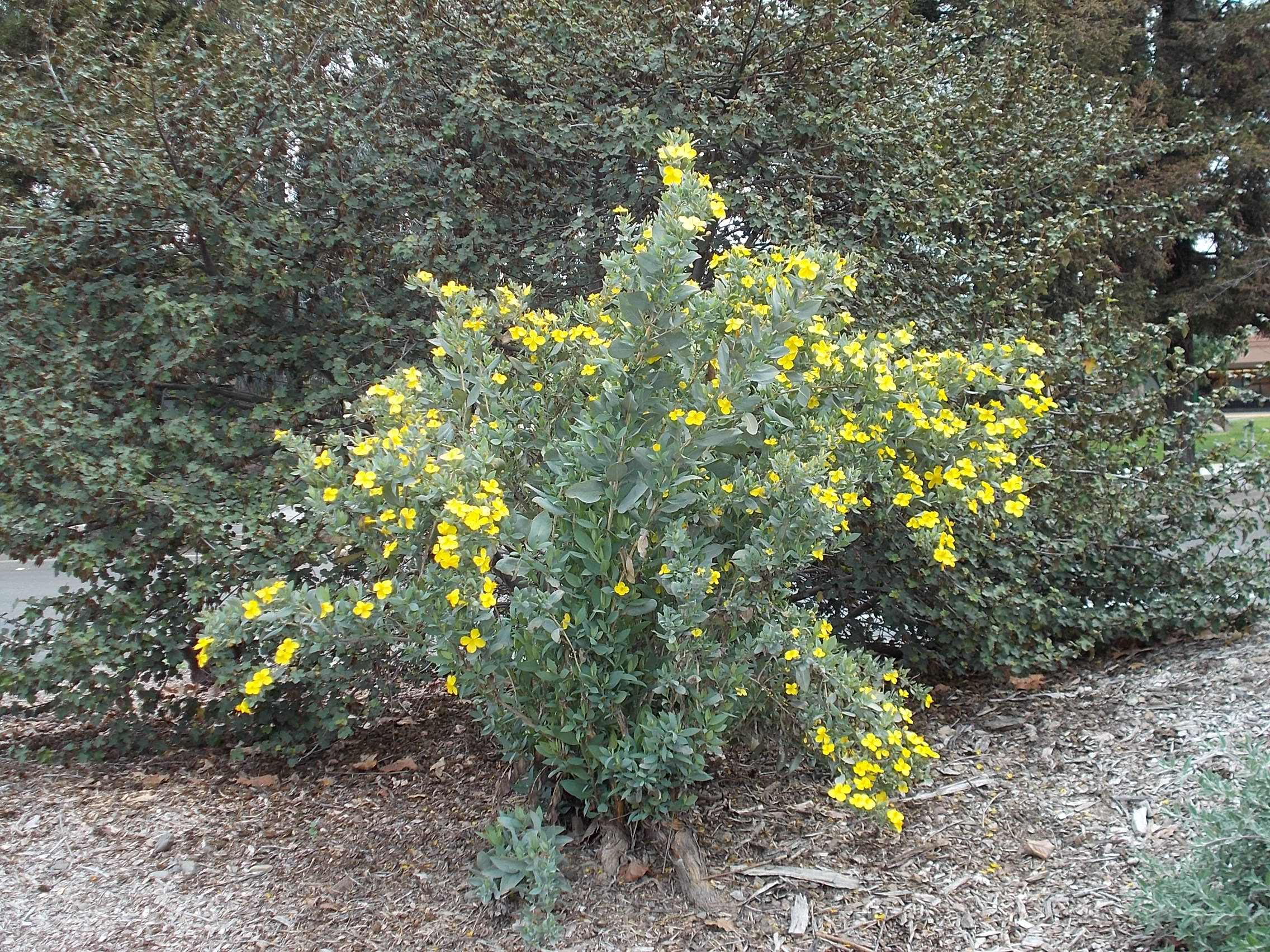
Bush poppy blossom 3           The bush poppy (Dendromecon rigida) really is a poppy (Family Papaveraceae),  it just doesn’t look like the poppies we are accustomed to seeing.  And, strictly speaking, it’s supposed to bloom from February to May or June.  But the bush poppy (also called a tree poppy) at the Granada Native Garden doesn’t know that — it seems to be in bloom all year round, more or less.  More during its assigned blooming season.                                            The bush poppy is one of those plants at the Granada Native Garden that never receives any water (once it is firmly established) outside of the rainy season — no summer water.  It grows well in both sun or shade, but seems to prefer sunny locations (which match its brilliantly sunny blossoms!), as long as the drainage is very good.  The only care we give it in exchange for its colorful addition to the Garden is to remove the older, dead leaves, which are slow to fall off and need to be removed by hand from time to time.Whole Dendromecon                                                              The bush poppy is  also a “Fire Follower” (see the July 10, 2014 post for more about fire followers).  Our bush poppy was touched on its right side by the June 1, 2014 fire, which ruined its otherwise perfect symmetry.  Ironically, occasional fire is good for bush poppies — fires that sweep over ground where their seeds have fallen seem to enhance their ability to germinate.  In fact, one tool that nursery personnel use to germinate bush poppy seeds is to plant them in flats, then put some leaf litter on top of the flats and set the litter on fire.  (Note:  You can usually enlarge photos by clicking on them.)               Another variety, the Island Bush Poppy, (Dendromecon harfordii) is almost identical to D. rigida, but is reported to be somewhat more difficult to grow.

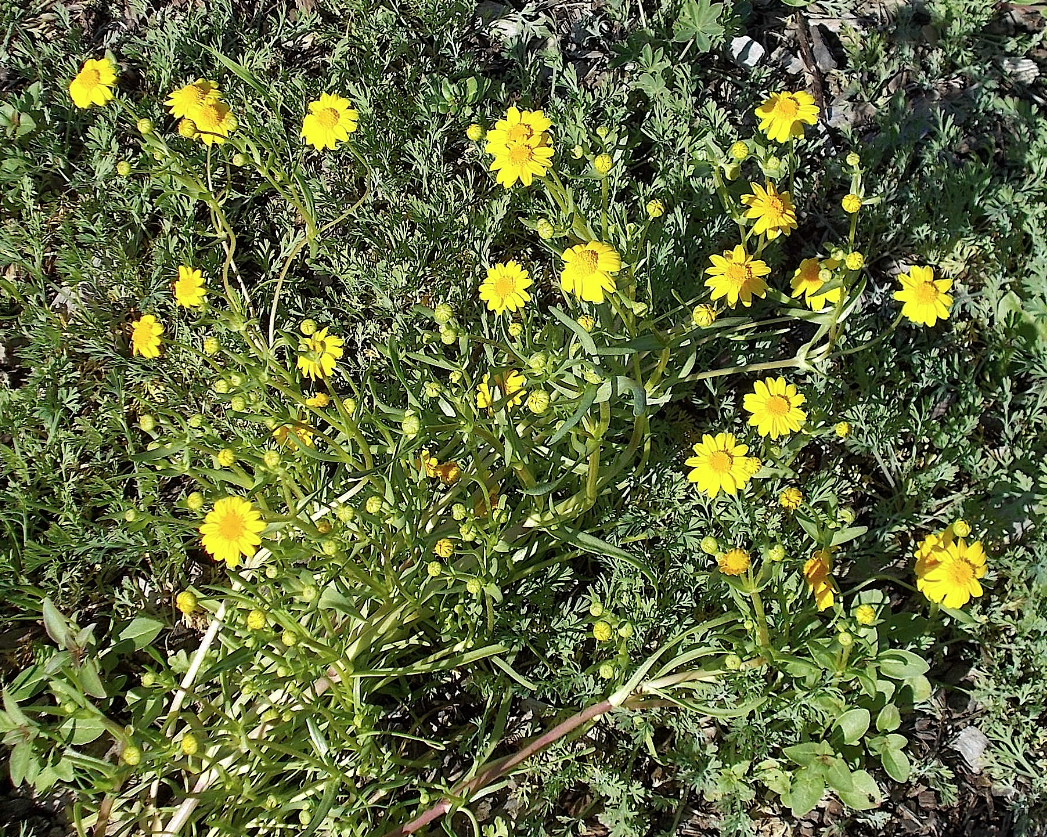
Coming Attractions! Lupine                                                                          During the past two years, the GNG staff has tried to add a wider selection of native wildflowers to the Garden.  Among the additions are more lupine (Lupinus succulentus, at the right → ), as well as five-spot (Nemophila maculata, below ↓ at the left), baby blue eyes (Nemophila menziesii), goldfields (Lasthenia Five-Spotglabrata), and evening primrose (Oenothera hookeri).  Planted last year and spreading on their own this year in considerable abundance are lots of farewell-to-spring (Clarkia amoena, below ↓ at the right) and fiddleneck (Amsinckia menziesii).  The five-spot and the goldfields are already showing signs of blooming.  If theFarewell-to-Spring weather helps out (that is, with a little more rain), we should be able to enjoy an exciting display of native California wildflowers this Spring, primarily in March and April.  Along, of course, with the California poppies, which are perennial show-stoppers.  Don’t miss them, beginning now, thru March and April!

Quote du Jour                                                                                                                             Look deep into nature, and then you will understand everything better.
                                                                                                                   – Albert Einstein

ALN CreditScreen shot 2014-04-17 at 8.05.51 AM

Water Management at the Granada Native Garden

           Recently, the Granada Native Garden staff was asked to explain how watering issues are managed at the GNG during the current drought situation.  This is a good question, because there are several hundred plants at the Garden, and many of them were planted just this Fall, and if natives ever need water the most, it is when they are newly planted and need both time and water to become acclimatized to their new environment.  And, to make it more fun, there is no water supply at the Garden!                                                   Mary Ann suggested that this explanation of the watering procedure would make a useful post in the GNG Newsletter.  The following is an adaptation of the paper that was submitted.

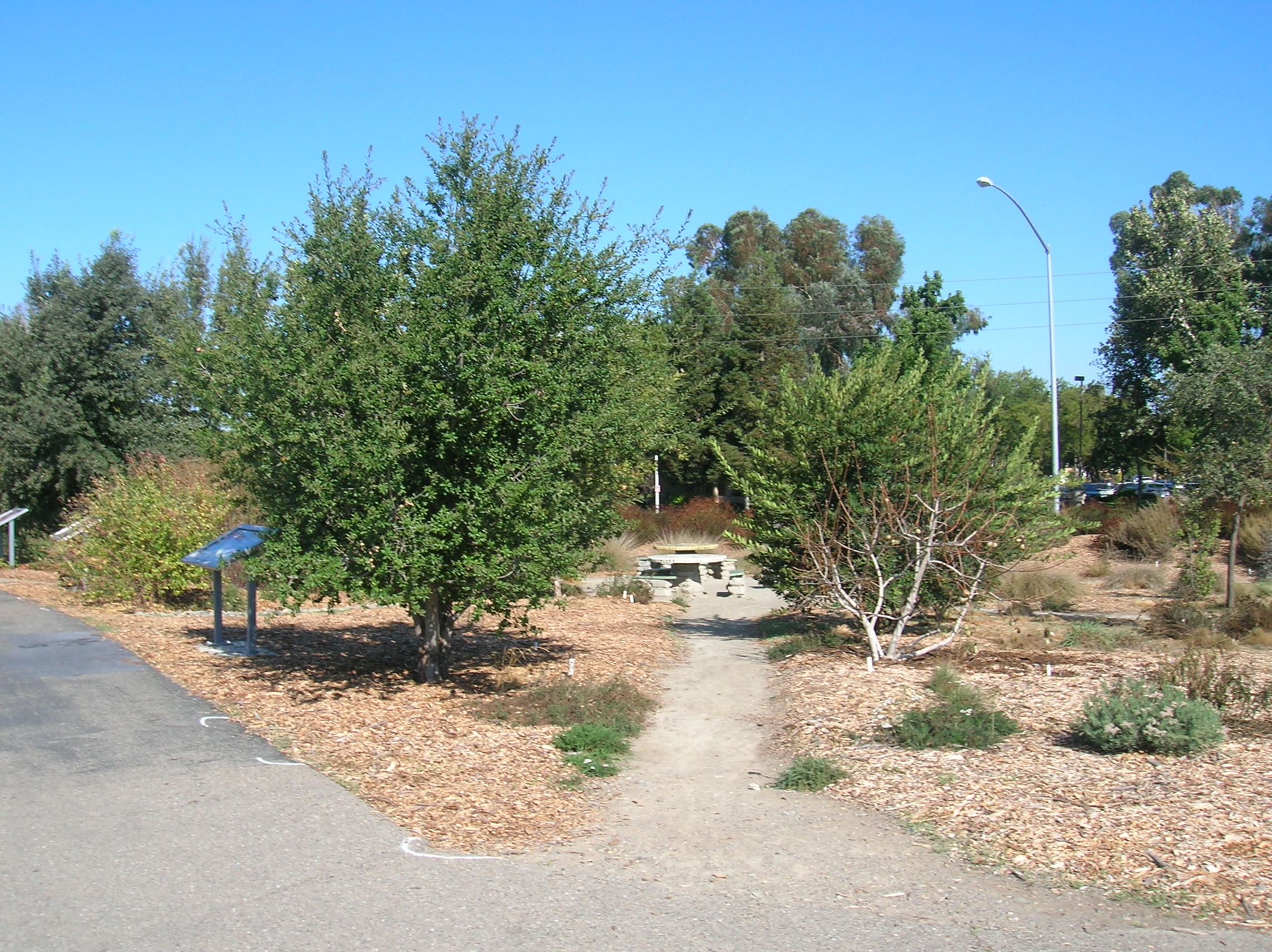
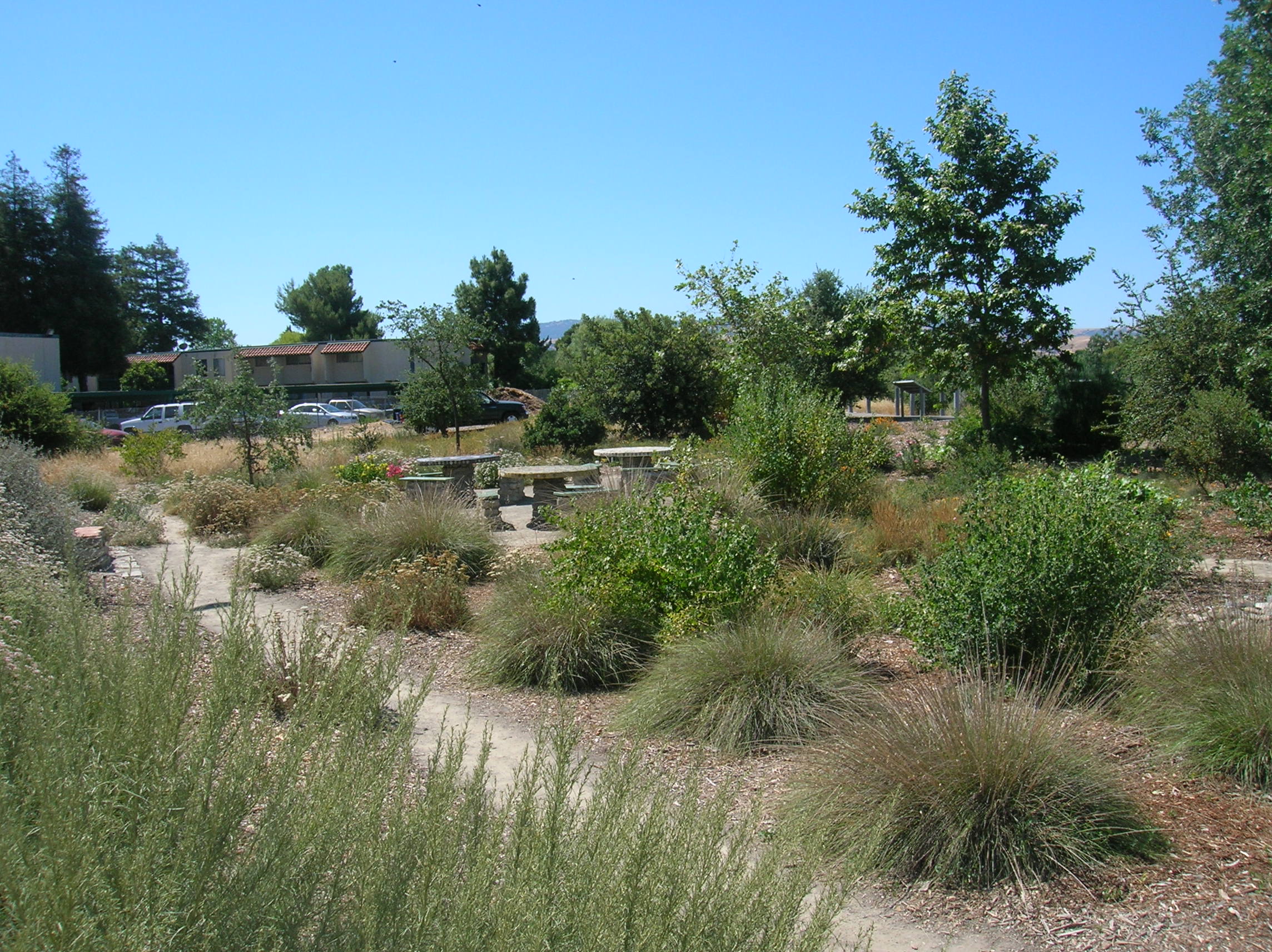
Southwest Entrance, Oct 2011Water at the Granada Native Garden                                                                                        The Granada Native Garden is a 1/3-acre plot in Livermore, California, completely landscaped with native California plants.  Wedged between Murrieta Blvd. and a popular bicycle and walking trail which parallels the Arroyo Mocho, it is roughly the shape of a long scalene triangle about 275 long and about 100 feet wide at its base.  This particular area was a barren, trash-strewn lot before it was adopted by an army of volunteers to become a native plant garden in 2004-05.  A testimony to the way a neglected piece of land can be transformed into a community asset with both aesthetic and educational value with environmental overtones, the Garden was primarily intended to be a demonstration of the kind of native California landscaping plants that can exist in the Livermore area using little or no summer water, only water that falls as rain in the winter or is present in the under-ground water table.  (Note:  Photos can usually be enlarged by clicking on them.)

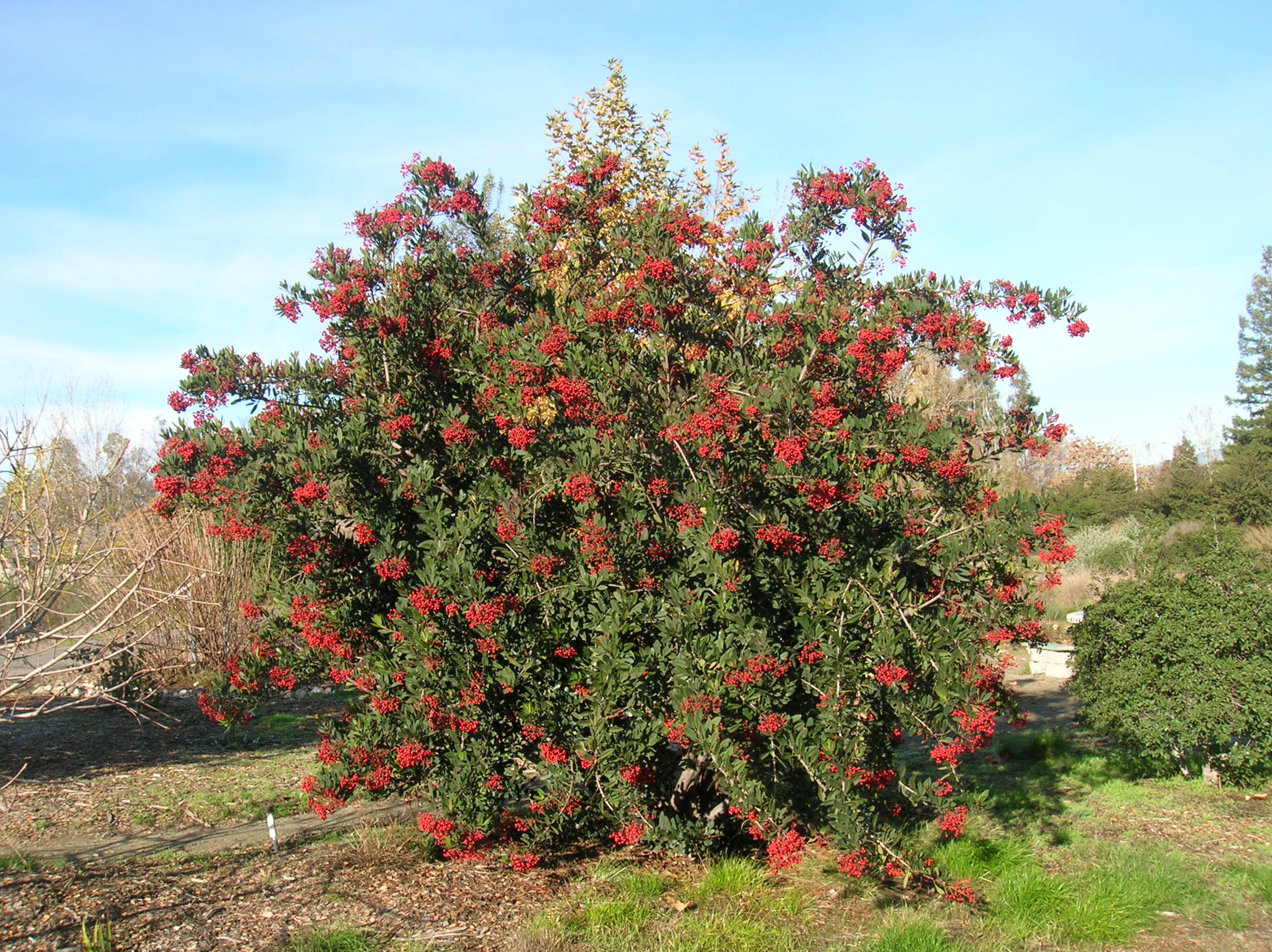
Toyon (Christmas berry) – no summer water

Toyon (Christmas berry) – NO Summer Water

Inasmuch as the original vision of the garden was to demonstrate California native plants that could survive without any summer water, it lacks a source of water for main- taining the plants.  Water that was originally needed to start the Garden was brought by means of a fire hose stretched across the arroyo from nearby Granada High School.  Therefore any water that is needed at present to maintain the plants, or to install new plantings, must be brought in from other sources, or carried up from the arroyo by the bucketful when water happens to be flowing in the arroyo. Now, 10 years later, many native buckwheats, California lilacs, currants, oaks  and other natives still occupy a prominent place at the Garden, and receive no summer water.  The Garden is alive with California poppies in March and April.  Nevertheless, many specimens originally planted there no longer exist there.  This is chiefly because they did not receive the kind of regular care that any landscape plant requires in order to thrive.  Mainly, the care we refer to here is that of water management.  Every living thing, no matter where it comes from, requires some degree of water management, because every living thing consists mainly of water, without which it cannot survive.

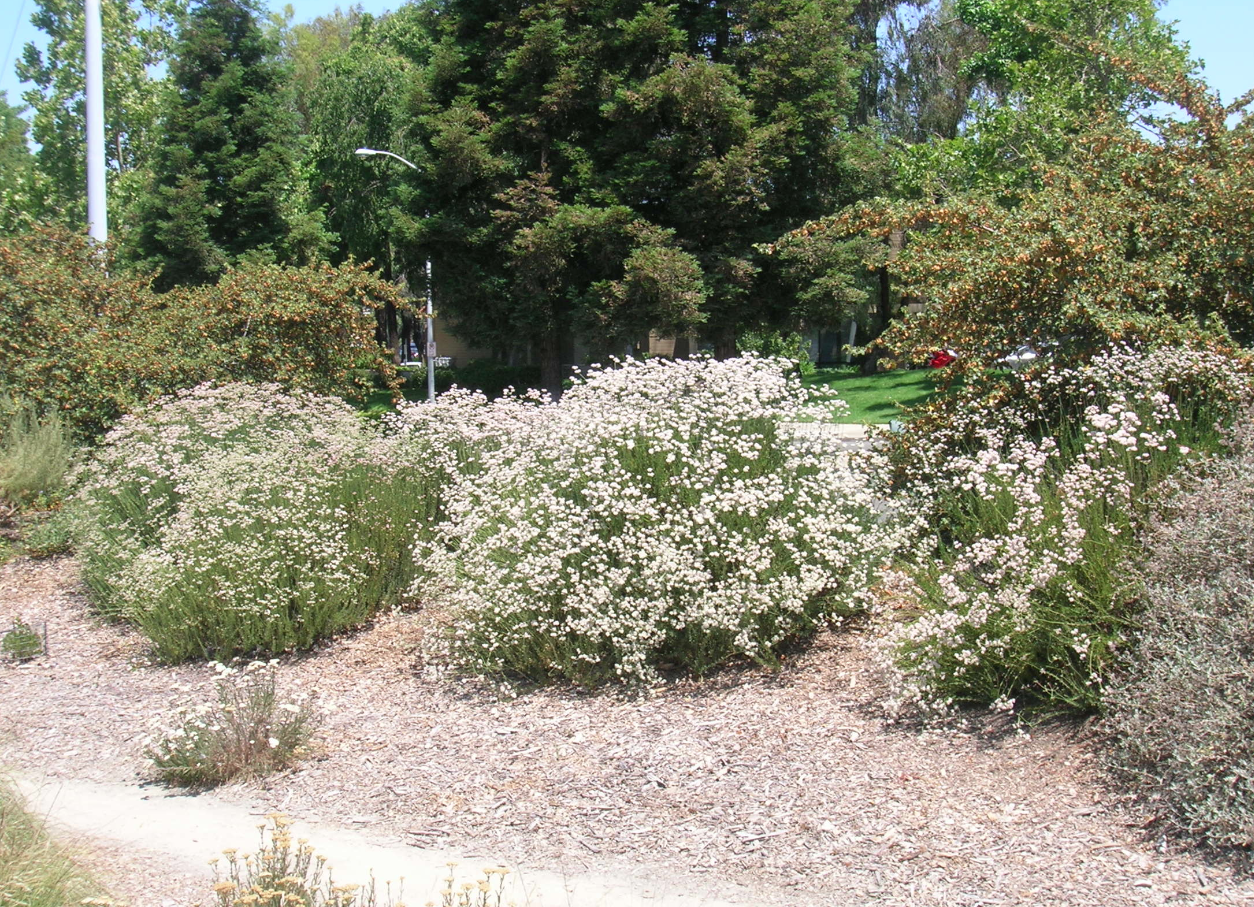
Buckwheat, in bloom – NO Summer Water

Buckwheat, in bloom – NO Summer Water

Buckwheat, in the fall – no summer water

Buckwheat, in the fall – NO Summer Water


How Much Water Is Needed at the Granada Native Garden                                                    When water is at a premium, as during times of drought, it is important to know what kind of water regimen a plant needs in order to thrive, or at least to survive until better times.                                                                                                                                    At the Granada Native Garden, we routinely research the specific water require- ments of each plant we plan to add to the Garden.  This is especially true with specimens that are used to fill in empty spots, or to replace specimens that have not survived due to natural attrition or inadvertent neglect, or as a result of a recent fire that spread to the Garden.  It is characteristic of native plants that they require a considerable amount of water in order to get them established, but in general they require little or no water to maintain them after that.                                                                                                                  At the time of this writing (November, 2014), we are maintaining over 100 individual plants that were installed within the past year or two.  These plants need to be watered about once each week, or in some cases every two weeks.  The water requirement for this effort amounts to about 75-100 gallons per week.  Once they are established (the usual standard for this is two years in the ground and double the size), the water requirement will be reduced to biweekly, monthly, or not at all after the rainy season — depending on the needs of the plant and the amount of water that is believed to be available from the water table or from the atmosphere in the form of fog or natural humidity.  Keep in mind, however, that the water table is continually dropping because water is drawn from it to support local homes and businesses, and the lack of abundant rain in the winter doesn’t allow the water table to be replenished.                                                                                           I would like to point out that the number of individual plants we are maintaining is substantially greater than the number of plants likely to be found in a residential garden.  Some plants require more water than others, depending on their initial size, specific requirements, or location in the Garden.  And while 100 gallons per week seems like a lot of water, it is actually less than 5% of my family’s weekly water usage during October-November, 2014 — which goes to show how much water a typical family uses in a week!   I estimate that the cost of this water is about $5 per week.

Drip Buckets

One-gallon & 1/2-gallon drip buckets

How Water Is Supplied to Plants at the Granada Native Garden                                            Because there is no source of water that can be tapped into at the Granada Native Garden, all water must be brought in from other sources, and administered to each plant by hand.                                                                                                                                          Keep in mind that none of the established plants at the Garden need to be watered at all during the summer (although we feel that a few could profit appearance-wise by occasional summer water, such as once or twice a month).  But because of the large number of new plants that have been added, we spend about 2-4 hours per week manually carrying water to each plant that requires it in order to get it established.  Irrigation is facilitated by means of one-gallon and half-gallon buckets that have three or four small (1/8-inch) holes drilled near the bottom of the bucket.  Once the apparent water requirement of each plant is estimated, a bucket of appropriate size, or sometimes two or more, is placed at or near the base of the plant.  Water is then carried in 1-gallon con- tainers to each plant and poured into each bucket.  The holes allow the water to be slowly released into the soil, rather than trickling along the surface and away from the plant where it would not reach the roots.  We call them “trickle buckets” or “drip buckets”, as they roughly simulate drip irrigation.                                                                                                         In the case of recently planted specimens, some of the water is poured directly on the base of the plant in order to irrigate the center of the root ball; the rest is poured into the bucket.  As a plant grows, the buckets should be moved farther from the plant base in order to encourage outward expansion of the root system.  Often more than one bucket is placed at the base of a plant, as needed to distribute water more uniformly around the root ball.  For some larger plants, 3 or 4 one-gallon buckets with holes drilled directly on the bottom are placed over the root zone to provide wider coverage.                                                    Once a bucket is filled, it can be left to drain while the worker moves on to other plants.  Drainage usually takes 5-10 minutes.  Once a week is generally enough to irrigate a specimen, as most native plants usually like to go dry between waterings, rather than be kept constantly wet.  Daily watering is never necessary.

Golden currant – NO Summer Water

Golden currant – NO Summer Water

How Practices at the Granada Native Garden Can Be Adopted by Homeowners                                       It should be obvious that the method of irrigation described above requires a good deal of involvement on the part of the gardener, as well as a knowledge, or a good estimate (i.e., an educated guess) about the needs of the plant.  However, this task should be dramatically easier for a homeowner with a landscape of typical size, as opposed to a native garden one-third of an acre in size, planted entirely with natives.  Furthermore, most of the inconvenience in carrying out this procedure consists of setting out the buckets and collecting them afterward.  Often a homeowner can efficiently fill the buckets from a garden hose equipped with a hand-operated shutoff nozzle.                                                           One additional advantage of hand-watering over an automatic irrigation system is that it gives the gardener the opportunity to observe each plant individually once a week and see how it is doing.  That way, signs of stress (usually not enough water, too much water, or water in the wrong place) can be noticed and addressed before the plant suffers irreversible damage.

Bush poppy – NO summer water

Bush poppy – NO summer water

On the other hand, it is likely that many home gardeners do not have the time or inclination to water their plants individually, as described above.  Furthermore, for the same reason, they are unlikely to have a satisfactory knowledge of the water requirements of each plant (which can easily be had by researching the plants, but again that requires both time and the inclination).                  To address this issue, one suggestion is that those native plant advocates who have an above-average knowledge of native plants be willing to donate time, free of charge and within reason, to any home gardener who requests it.  Free, because charging for such advice is a disincentive to ask for it.  I personally would be pleased to have someone solicit my knowledge and experience, limited though it is, without charging them anything; but of course I don’t depend on that for my living.  A professional native gardener might simply offer, for example, one hour of free advice (and maybe encourage more business).                        Finally, if the drought persists, the water management at the Granada Native Garden might need to be revisited.  The current plan is to decrease watering as the plants mature, but the lack of an underground water reservoir might make the work of sustaining the plants burdensome and unmanageable.  Time will tell.  Adapt or perish.

Martha & Kerry, hard at work building the Garden

Martha & Kerry, hard at work building the Garden

ALN Credit

Screen shot 2014-04-17 at 8.05.51 AM

Why Should We Plant Natives?

The Granada Native Garden in April, 2014

The Granada Native Garden in April, 2014

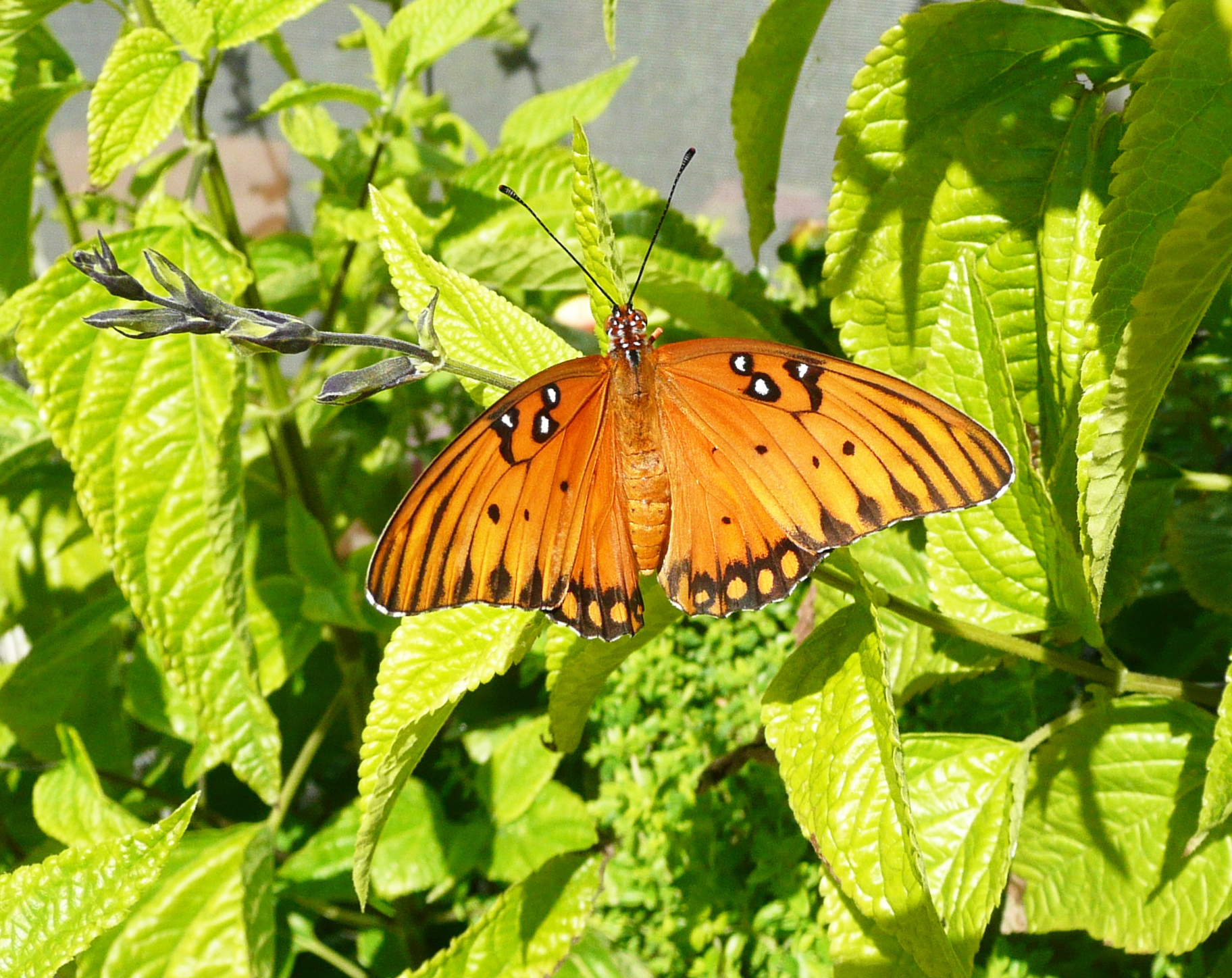
For Beauty and Color                                                                                                                   For many years, Jeff’s mother felt that native California plants just wouldn’t look right in her garden in Orange County, California.  She had planted a lush non-native landscape to remind her of her Pennsylvania childhood, and she resisted incorporating even one California native.                                                                                                               Then, she discovered the Matilija poppy, and her resistance evaporated.                              Now, Jeff’s mother takes joy in the Verbena lilacina, Penstemon Margarita BOP and Ceanothus ‘Ray Hartman’ which showplace in her garden.  She delights in the gulf fritillary and monarch butterflies that sip nectar from her flowers and lay eggs in her garden – things she had never noticed before.  Goldfinches feed the caterpillars to their young and feast on the seeds produced by her now-California garden.                                                             This is the kind of paradigm change that needs to happen in our California gardens and yards.  Small changes in many yards will make a big psychological impact.

Matilija Poppy

Matilija Poppy

A Sense of Place                                      We often travel to other places to experience the people, culture, customs and environment in other parts of the country and the world.  How boring it would be if every place were the same!                         And yet, globalization is allowing this to happen.  A traveler to France recently commented that many of the front and back yards there looked the same as those in Southern California.  Go to a Home Depot or Lowe’s in Southern California, then to a Botanic or Jardiland in France, companies with extensive market presence, and you will find them selling many of the same plants from all over the world:  hydrangea, lantana, oleander, photinia, pittosporum, and many others.                                           One writer reports that he has even found the famous drought-resistant California native, matilija poppy, growing in Cheshire, England, where the climate could not be more different.  If you spend good money to travel to Europe or anywhere else in the world, do you want to see California transplanted there?                                                                                 California became known as the land of flowers from the time the first explorers set foot here.  Others who followed were amazed by the wide range of plant types, including trees, shrubs, perennials, bulb plants, vines, succulents, grasses and non-flowering plants.  While some of these plants were similar to those of their homelands, many were new to them.                                                                                                                                   Now, if you walk around any typical California neighborhood, it will be hard to find many, if any, of these California natives growing there.  Is California becoming like any other place in the world?  Have we lost our sense of place?                                                          On a deeper level, social psychologists believe that the environment which children experience while growing up influences their environmental preferences as adults.  This sense of place forms part of their identity and forms a basis for them to consider, evaluate and appreciate subsequent places later in life.                                                                                    (Note:  Most photos can be enlarged just by clicking on them.)

The same scene, April, 2005

The same scene, April, 2005

The Granada Native Garden in December, 2002

The Granada Native Garden in December, 2002

                                                                       Environmental Compatibility                                                                                                       Native plants have evolved to live within the local climate, soil types and water supply.  Simply stated, native plants grow well in the climate in which they have evolved – better than those that evolved in Asia or South Africa.  Furthermore, native bees, butterflies, birds and other animals have co-evolved with the same native plants, so that both native plants and native animals depend on one another for food, shelter and reproductive success.  When one part of this collage disappears, the rest of it is irretrievably affected.

The Garden in June, 2012

The Garden in June, 2012

Resistance to Pests                                                                                                                      Because native plants have evolved alongside native pest organisms, they have developed resistances to the pests and are less likely to be affected by them.  The loss of native plants in the environment, and their replacement by plants that have evolved in a different environment, disrupts this natural balance between plants and animals.  Plants that have the potential to become invasive, and animals that can turn into pests, no longer have the natural controls that keep their populations in check.

A golden digger wasp – great for pest control!

A golden digger wasp – great for pest control!

As a result, humans resort to artifi- cial herbicides and pesticides which further degrade the environment, get into our bodies, and kill off both the pests and the beneficial insects as well.                                                        The re-introduction of more native plants can help restore the balance between native plants and animals.

Low Water Requirements                         In general, plants that evolved in the Caifornia environ- ment have adapted to wet winters and dry summers.  It is true that native plants need a considerable supply of water at first in order to establish them.  But for the most part, once they have been in place for two years and have doubled in size, they don’t require year- round irrigation (altho many of them are adapted to dry summers and go dormant, but a little summer water often helps them look better even in the dry months).                                         Nonetheless, homeowners who have sacrificed their thirsty lawns with an attractive, well-planned array of native California plants report that their monthly water bills are much lower, while their home landscaping remains both attractive and something to be proud of.  Moreover, the science and technology of water-wise irrigation has come a long way in the last 40-50 years.                                                                                                                  (Remember, most photos can be enlarged just by clicking on them.)

Native irises, Santa Barbara daisies, and California poppies in Cindy's garden.

Native irises, Santa Barbara daisies, and California poppies in Cindy’s garden.

Minimal Maintenance Expense                                                                                                   California native plants have evolved to thrive in the heavy, dry, clay and gravelly soils that characterize the Livermore-Amador Valley.  If properly selected and sited, native plants should flourish with a minimum of attention.  Fertilizing, spraying and pruning can be reduced or eliminated – a healthy layer of mulch provides as much slow-release fertilizer as the natives require.  Appropriate strategies help create a self-maintaining ecosystem that will attract in beneficial bugs to out-compete and devour the unwelcome ones.  Occasional pruning, shaping and dead-heading, which is routine with any landscape or garden, is all that is needed.

Lilac verbena, California lilac and Idaho fescue in Cindy's garden.

Lilac verbena, California lilac and Idaho fescue in Cindy’s garden.

Habitat Preservation                                                                                                                    Non-native plants often mean trouble for natives.  They might simply be more competitive than native species for nutrients, light, space, water or food.  At the Granada Native Garden, the first winter rains produce fast-growing non-native grasses and weeds that smother the natives which are just emerging, unless our volunteers aggressively evict the weeds as they appear.                                                                                                               If a non-native species has evolved to survive competition from other plants or from predation, it might have no competition in its new environment.  Some non-native weeds produce chemicals that inhibit the growth of other plants in the same vicinity.  The root systems of some species might enable them to reach water unavailable to the surrounding natives, thus crowding out the natives.  Others are better able to resist fire and to recover after frequent, intense fires.  The invasive species eventually grows larger and denser as it adapts to its new location, thus displacing the natives.                                                                    Furthermore, the loss of native species results in the decline of native birds and insects that have evolved to rely on these plants.  It is happening all over the world.

Hummingbird fuchsia greets visitors in Kerry's garden.

Hummingbird fuchsia greets visitors in Kerry’s garden.

Attracting Wildlife                                                                                                                         Birds and pollinators are essentials, not luxuries.  Birds provide natural pest control, watershed protection and re-forestation services.  And the Audubon Society says that the best way to attract birds is to plant natives.

A gulf fritillary butterfly in Jim's garden.

A gulf fritillary butterfly in Jim’s garden.

Insect pollinators guarantee our supply of fruits, nuts and vegeta- bles.  Without insect pollinators, we would have to resort to artificial, tedious and expensive means of pollination.                                                   But wildlife is also important to humans on a different level.  As Raymond Dasmann has explained:  “Anyone who has not been blind to the world around him knows that life for people can be enriched by the presence of wild creatures in man’s environment.  The enjoyment of watching wild animals in wild places adds a savor to life, even if it is but a casual encounter.  The knowledge that wild nature still exists adds a dimension of freedom to an otherwise restricted life – leaves open the possibility for escape from the narrow confinements of civilization.  If we create in California a world with no space left for wild animals, it will prove to be a world with little space for human freedom.”  (Raymond F. Dasmann, The Destruction of California, page 58)

A mama California quail and her children, out for a  stroll.

A mama California quail and her children, out for a stroll.

Historical Uses of Native Plants                                                                                                  Susan and Andy were thinking about replacing their water-thirsty landscape with something else to save water and make it more California-like.  But what?                                      One Sunday morning, they happened to take advantage of a program at Sycamore Grove Park, and native California plants was the topic.  The ranger explained how, for example, acorns from native oaks were a major food staple for the Native Americans, and how the acorns were processed to make them edible.  They were fascinated when the ranger explained how the comely fruits of the California buckeye could be used to sedate fish and make them easy to catch.  Acres of purple needlegrass produced an enormous amount of edible seeds.  Large clumps of deergrass were harvested to make baskets of many shapes, sizes and uses.  Native edible elderberries also had many medicinal uses, and even the dried stems of the elderberry bush were fashioned into flutes.  It gradually dawned on Susan and Andy that a landscape full of native California plants would be the perfect addition to their California home!                                                                                          Knowing something about the natural history of plants – that is, the role they play in the environment – definitely contributes to our enjoyment of native plants and helps us to feel as part of nature, not apart from it.  The original inhabitants of California had no supermarkets, drugstores and hospitals, hardware stores, department stores and factories to supply their needs.  Everything they needed was obtained, or created by them, from the plants and animals around them – food, clothing, medicines, shelter, tools and equipment, even toys and musical instruments.  And don’t forget how important native plants are to native birds, insects and mammals.                                                                                                 “The first European visitors to California found a park-like landscape that was the result of a long history of land management.  Indigenous people practiced tilling, sowing, weeding, pruning, burning and selective harvesting to manage plant populations and shape their natural environments.  They gathered wild plants for food, medicine, basketry, clothing and other uses.”  (Marjorie G. Schmidt & Katherine L. Greenberg, Growing California Native Plants, 2nd ed., pp. 3-4)

A buckeye fruit (upper left) and its nut (below)

A buckeye fruit (upper left) and its nut (below)

Almost everything growing at the Granada Native Garden was useful to the indigenous people in one way or another.  Many of the plant identification markers at the Granada Native Garden include notes about the historical uses of native plants.  Check them out!

Quote du Jour                                          “Just because it will grow in your garden, doesn’t mean you should plant it.”                                 Anonymous

Screen shot 2014-04-17 at 8.05.51 AM